Showing posts with label community science. Show all posts

Thursday, August 14, 2025

Bugwatching Book Launch

My new book, Bugwatching: The Art, Joy, and Importance of Observing Insects, had its first event last Saturday at the Linda Hall Library in Kansas City, Missouri, USA. It was well attended both in person and via a livestream, with over 600 individuals registered.

Linda Hall Library is a science library with many historically important holdings. They also create professional quality in-house exhibits, and host speakers on a variety of topics. With any luck I will be invited back to present again. The staff is friendly, and a true joy to work with.

This past Wednesday I was one of the panelists for a Grow Native! webinar, titled “Dispelling Myths of Native Gardening.” Grow Native! is the native plant marketing, and educational arm, of Missouri Prairie Foundation, another excellent organization. I think I gained as much from the other panelists as I gave in my own expertise and experience.

Please consider booking me for your own event, as I have few scheduled thus far. I do have one high profile engagement on Thursday, January 8, 2026, but I am not at liberty to disclose additional information at this time. Watch this space and I will update as I am able.

I apologize for not keeping up with the comments over the last month. I was on vacation, and then had these two programs to prepare for. I am currently caught up, and intend to stay that way. I typically review comments every Tuesday, at the least.

I have been trying to remember to use my phone to take photos, like this one tonight of an immature female Round-tipped Conehead katydid in our yard.

My photos are also severely backlogged. I have become frightened by the potential of losing them in the uploading process (I frequently cannot safely eject the SD card from my laptop, for example). Consequently, I have not uploaded cards in their entirety since mid-September, 2022. I take far too many photos, and that makes the process daunting as well. I wish I was better organized, but this is the current situation. Thank you for your patience and understanding.

My dear friend Alexandra Rose (an oceanographer), and her mom, Pam, have always been supportive of my work.

As we continue to face collective challenges such as the effects of climate change, the rise of authoritarian regimes at home and abroad, and the uncertainties of labor and the marketplace, I wish all of you the best. Please keep up your own ”good trouble,” your art, your science communication, or whatever gives you joy, hope, peace, and confidence.

Wednesday, July 16, 2025

Accidental Achievement

When we lived in Colorado Springs, I would walk our neighborhood regularly, if not daily, unless the weather was severe. Little did I know that one such constitutional would yield something globally significant.

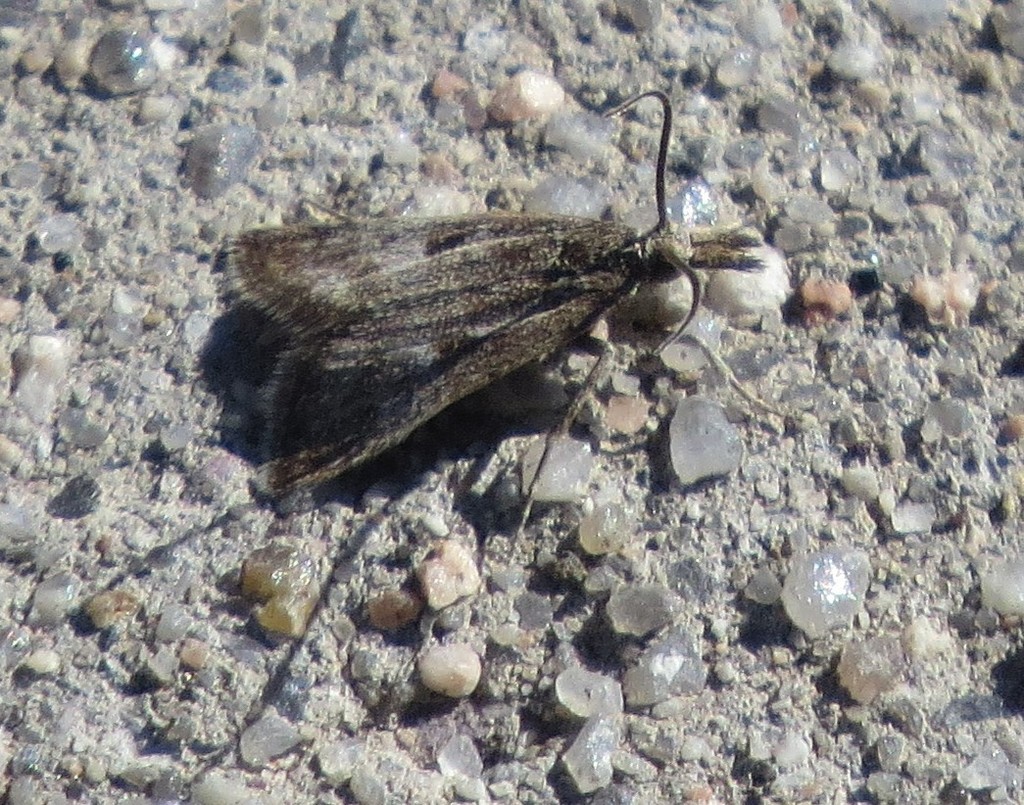
My photo of the male moth.

On the afternoon of November 5, 2020, passing a vacant lot up the street that I had passed by almost daily, I noticed small moths flying around. Many moth species fly late into autumn, so that alone did not intrigue me. Many moths fly during daylight hours, so that was not unusual, either. Curious me wanted to document the thing anyway, but that was easier said than done. The moths were wary, and quickly disappeared into weeds when they landed, camouflaged.

Finally, one of them landed on the sidewalk, and as I recall a bit of a breeze kept it from taking flight again immediately. Not the best of photos, but I put it on iNaturalist anyway. I wasn’t even completely sure of the family, but I figured something so common would be recognized by an expert eventually.

My iNaturalist entry.

Fast forward to November of 2024, and I receive an email from Andrew Warren informing me that not only was this moth a species new to science, but that it also qualified to be in a new genus. I was shocked. How could something that abundant be completely overlooked until now?

It turns out I had the correct family (Crambidae), but obviously could not have put a more specific name to it. It didn’t have one! The paper describing the moth is now published, and anyone can view it here. I was not at liberty to share this story until after the publication, as a common courtesy to the authors.

Better image of a male, photo © Andrew Warren.

Allow me to briefly summarize, if you do not want the long story in the journal article. The moth has so far been collected between October 20 and November 22. Mine is so far the only record for El Paso County, but it is suspected to occur all along the Front Range, possibly into Wyoming in the north and New Mexico in the south. This is based on the host plant for the caterpillar, which is a grass known as Sand Dropseed, Sporobolus cryptandrus.

The larvae probably feed on the roots of the plant, because the moths have only been found in situations where the dropseed was either mowed or trampled. Seriously. Where the plants are upright, no moths. Sure enough, the vacant lot where I found mine was mowed regularly, much to my dismay until I learned this story.

The female moth, photo © Christian Nunes.

The females of the moth, which now bears the name Coloradactria frigida, are flightless, with heavy bodies and short wings. No wonder I never saw those. They certainly must emit a pheromone to attract the males.

Other known localities for the moth are in Douglas County around Castle Rock, and in Weld County, all in Colorado. Late autumn searching elsewhere should certainly turn up new records.

A mating pair of the moths, photo © Christian Nunes.

The lesson I have learned from this is that you can, and should, never assume anything when it comes to entomology. You do not even have to know what you are doing to make an earth-shattering discovery. We collectively know very little. It is your curiosity that counts. That, and your willingness to share what you find with others. Do the documenting with photographs, videos, and sound recordings, and put them out there. Please.

Source: Warren, Andrew D., Clifford D. Ferris, Bernard Landry, Jeremy Authier, Theo Leger, Julia Bilat, and Christian A. Nunes. 2025. “A New Genus and Species of Crambinae (Pyraloidea: Crambidae) With Brachypterous Females From Colorado, U.S.A.,” Journal of the Lepidopterists’ Society 79 (2): 73-84.

Thursday, September 12, 2024

I Am Not a Scientist

It’s cute when someone mistakes me for a scientist, presumably because I have written books about insects, made public presentations, and am active on social media. There are occasions, though, where the confusion wastes the other party’s time, and for that I am truly apologetic. I am still a reliable source of factual information, but please allow me to set the record straight.

This post is prompted by an email exchange I had recently with a dear friend and colleague who truly is a scientist, seeking my help with a project.

Them: “I have a favor to ask….

For the past [few] years I have been conducting a long-term….survey at different nature preserves….in the hopes of trying to get a better idea of conservatisms of these insects….Ultimately I want to be able to look at a species list of insects found within a natural community or natural area and determine….which sites provide high quality critical habitat for plant community specialist insects, separate from the plant C values ranks.

The problem is few people are familiar with a wide diversity of insects. Most experts just know a particular family of insects….I have ranked all 371 taxa based on my field expertise. I'm teaming up with a dragonfly specialist for the statistical analysis. [They have] some experience with developing conservatism ranks for dragonflies and is trying to apply this to my data.

Would you be willing to take a look at the list and provide numerical ranking for the species you readily recognize? I know [specific region] isn't your main stomping ground, but you do know many of the more common species, and your ranks would be most helpful.

If you are interested in getting involved and reviewing our work for a future publication, and possibly coauthoring with us, we are open to that….My goal is to bring attention to the insects here in [specified state].

Let me know if you have any questions.

Thanks so much.”

Me: “I am flattered by the request, and would be willing to help....if I understood the assignment. I have no idea what a "C value" is. I could potentially rank them in terms of the frequency with which I see that particular genus or species on a particular plant. That can still vary significantly from one year to the next. This year, in our area, insect numbers are down significantly. I am not seeing many insects….

If there is a concrete definition of C values, then please provide it. I may or may not be able to assist. Math is my greatest weakness, and I never took statistics (not that it would even be useful given that I was in college in the early 1980s).

I am a writer and sci-comm professional, all else comes in no particular order after that.”

Them: “Yeah, don't ask me to explain statistics either. That's why I team up with the survey biologists.

As far as I know the concept of the C value (or coefficient of conservatism) came about in 1979 to reduce subjectivity in the evaluation of plant communities by placing the subjectivity up front. All plant (or other taxa) are assigned a numeric value that [provides] assessment natural quality repeatability.

In basic terms, ‘how likely is this taxa found in a high quality community?’….It's not just how common it is, though that is a factor as high quality (conservative) species are typically found only in rare habitats and thus are less likely to be encountered. The numbering is from 0-10. Almost all state-listed species are assigned a value of 10….A goldenrod soldier beetle (Chauliognathus pensylvanicus) might be a 1 or 2 as they are common [pretty much everywhere].

We also ask that you rate your confidence level 1 - 3 (3 being very confident in your rank and 1 being much less familiar with the species).

Does that help?”

Me: “Yes, that does help. I am not qualified to undertake that, being unfamiliar with [those] ecosystems at *that level*….I'm sorry, but I would potentially be doing more harm than good if I took a stab at this.

Sorry!”

Them: “….

The point is to ask. I realize it's specialized. If others are unable, then that's part of our argument - we get the best data we can. I don't know if any of this is possible but I'm going to keep at it. The more I do the more I learn.

Thanks”

Me: “My comment wasn't an indictment, apologies if it sounded that way.

You are vastly more capable than I am, and have much more experience in that kind of habitat. Maybe someone at [non-profit organization] can help?

Maybe I do not make it clear enough to anyone that I am not as much an entomologist as an ‘insect identifier.’"

Them: “I didn't take it that way. No worries.”

There is another aspect of my personality at play here. I am inherently lazy. Community science is hard work, with demanding and specific requirements for projects aimed at collecting data. That is not what interests me. I am all about recruiting potential community scientists by sharing fascinating facts and personal experiences. Heck, if I can get someone to put down the fly swatter in favor of a magnifying glass, mission accomplished.

I want to change the behavior of the average Joe or Jane who despises insects and wants them gone. Humanity as a whole, and the entire planet, for that matter, cannot survive the continued loss of biodiversity and insect abundance. More to the point, I can’t survive it. Exploring the natural world and finding insects is one of the few exercises keeping me reasonably sane, and giving me a sense of purpose. Without the “bugs,” I vanish, too.

Friday, June 21, 2024

City Nature Challenge 2024 Recap

The April 26-29 weather forecast for the Greater Kansas City metro area was not promising, so I had low expectations of finding subjects to document for the 2024 City Nature Challenge occuring during that time. We were also going to be out of town for one of those days, further limiting opportunities for making observations. While it was mostly overcast with some periods of rain, it wasn't a complete washout by any means.

One of the best finds was an Orangeback syrphid fly, Pterallastes thoracicus, at Weston Bend State Park, Missouri.

I am fortunate to have the relative luxury of self-employment, able to take time to fully engage with events like City Nature Challenge. Not everyone has that privilege, so I want to thank everyone who made time to participate in this global event. Each year we collectively accrue more data for scientists to gauge trends in biodiversity and abundance, and take action accordingly to protect, conserve, and attract other species to our urban islands.

The diversity of ichneumon wasps alone at our house was amazing. This is a female Limonethe maurator.
A spectacular female Rhysella humida
Wow, a big female Dolichomitus irritator.
A very small Cymodusa distincta.

Friday, April 26, was spent looking for organisms around our home in Leavenworth, Kansas, a municipality included in the Kansas City project on iNaturalist. Well, the entire county is included, which means there is potential for rural observations. I like that the project encourages participation by inviting outlying commuinities, so the tradoff is worth it.

Triangulate Combfoot spider, Steatoda triangulosa.
Brown Recluse, Loxosceles reclusa.

I always make sure to look in our detached garage for spiders and other arthropods, and the cooler, cloudy weather in the morning meant there was not much to see in the yard. I did document birds, squirrels, and plants, too. In the garage I uncovered the obligatory Brown Recluse, Loxosceles reclusa, plus two cobweb weavers (Theridiidae) and a cellar spider (Pholcidae).

Cuckoo wasp, tribe Chrysidini.
Marbled Fungus Weevil, Euparius marmoreus.
Ribbed cocoon-maker moth, Bucculatrix sp.
Privet Leafhopper, Fieberiella florii.
Aw-w-w, a pseudoscorpion!

Outdoors, I discovered more spiders, mostly on the exterior of our house, plus a few flies, beetles, ants, true bugs, moths, and several wasps. The sun even came out for a sliver of time in the afternoon, but I was pleasantly surprised by what was on the wing the rest of the day.

The late afternoon, and the following day (Saturday) found us in another county for an annual spring field trip of professional herpetologists and amateur reptile and amphibian enthusiasts.Sunday, April 28, was spent at home again, and was the least productive day of observations.

Zebra Swallowtail with just a little pollen.

We like to explore the Leavenworth Landing Park, and Weston Bend State Park across the river in Platte County, Missouri at some point during the City Nature Challenge, and we did so on Monday, April 29. The weather was much better, sunny and warm. The most obvious insects were butterflies. Red Admiral (Vanessa atalanta), and Zebra Swallowtail (Eurytides marcellus), were exceptionally abundant, but we saw other Lepidoptera, too. Bees, flies, and dragonflies were also common, and reasonably diverse.

Blue-green Bottle Fly, Lucillia coeruleiviridis.
A pollen-dusted female mason bee, Osmia sp.
Orchard Spider, Leucauge venusta.
Tachinid fly, Epalpus signifer.
Eastern Tiger Swallowtail male, Papilio glaucus.

I took advantage of the continuing favorable weather and put out a blacklight and sheet in our front yard Monday night. More moth, beetle, and fly species were attracted. I also prowled around the yard and found a couple other insects lurking in the darkness.

Four-spotted Angle moth, Trigrammia quadrinotaria.
Square-gill mayfly, Caenis sp.
Dance fly, Rhamphomyia nasoni.
"Major" and "minor" workers of the Chestnut Carpenter Ant, Camponotus castaneus.
Large Yellow Underwing moth, Noctua pronuba.
Fungus gnat, family Mycetophilidae.

Statistically, I finished with 374 observations of insects and arachnids, totalling 238 "species," thanks to the help of 90 individuals offering or confirming identifications. I am still unclear as to what qualifies as a species on iNaturalist. I think it considers any unique taxon as a species when it creates the stats. In any event, identifications are a work in progress, so it may be years before a more refined assessment is made.

Grape Berry Moth, Paralobesia viteana.

I am already looking forward to next year's City Nature Challenge. It may be my favorite "holiday," in fact, a celebration of the other species that share the planet with us. The human race could profit by having more such occasions for observing other organisms. It is a good reminder of our obligations of stewardship to the Earth.

Rust fly, Loxocera fumipennis.

Friday, May 12, 2023

City Nature Challenge 2023 Recap

Pearl Crescent butterfly, Phyciodes tharos

Here, in our neck of the woods in Leavenworth, Kansas, USA, the 2023 City Nature Challenge was, well, challenging. Our county is part of the Greater Kansas City Metro as defined for the City Nature Challenge. Besides unseasonably cool temperatures, and viciously windy weather, there was the competition of the National Football League draft in downtown Kansas City, Missouri. Despite those circumstances, the results were excellent.

I kept an eye out for birds, too, like this Red-tailed Hawk

There were 294 "observers," or people who recorded observations of flora and fauna, making a total of 3,640 sightings, beginning Friday, April 28, and ending May 1 (Friday through Monday). Currently, the observations represent 807 species, and climbing, thanks to the work of more than 300 "identifiers," people proficient in the identification of various organisms. This is an increase over last year's totals of 239 observers making 1,944 observations of 651 species.

A tiny lace bug, Corythucha sp.

Personally, I ventured out only Friday, April 28, and Monday, May 1, both very windy days. We also put out a blacklight and sheet in the back yard the night of May 1 to see what night-flying insects we could attract. We had an invitation to make observations in Topeka, a non-participating city, on Saturday, April 29, which was of course the best weather day in the span of the event.

Plants and fungi accounted for about half the total observations. Over half the animal observations were insects and arachnids.

Cute and camouflaged Blanchard's Cricket Frog

Most of my own observations were in Havens Park, the only "wild" park within walking distance of our home. My partner, Heidi, needs our car for work. Havens has lawns with a few trees, plus extensive oak-hickory forests, and glades dominated by Eastern Red Cedar at the summit of the park. The area has been abused by illegal dumping, and was notorious as a place for drug deals, but these crimes have subsided drastically. Illegal off-road vehicle traffic remains a problem, with the resulting erosion and gouging of the landscape. I see few people on any of the trails, including paved biking and walking trails, but I am usually there on weekdays.

An assassin bug, Sinea sp, in waiting

I found a surprising diversity of butterflies in spite of the periodic strong wind gusts. It helped that a few flowers were blooming, and there were some mud puddles persisting from previous rain.

Eastern Tailed-blue butterfly
Juvenal's Duskywing skipper, Erynnis juvenalis
Gray Hairstreak, Strymon melinus
Red Admiral, Vanessa atalanta
American Lady, Vanessa virginiensis
Juniper Hairstreak, Callophrys gryneus
Questionmark butterfly, Polygonia interrogationis

Few moths were seen, though turning on our porch light on one night, and deploying a blacklight on another, helped to reveal them.

Unidentified geometer moth
Tiny ribbed cocoon-maker moth, Bucculatrix sp.
A phycitine knot-horned moth, family Pyralidae
Celery Leaftier Moth, Udea rubigalis

The most diverse and conspicuous insects were flies, with several families represented.

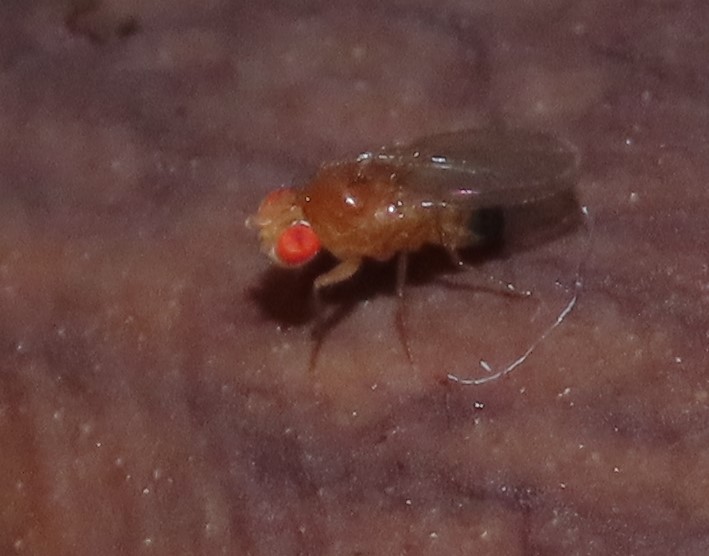
Drosophila sp. pomace fly in the kitchen
Large Bee Fly, Bombylius major
Root maggot fly, Eutrichota sp
Shore fly, Brachydeutera sp., on the surface of a mud puddle
Shiny Bluebottle Fly, Cynomya cadaverina
Pufftail flower fly, Sphegina sp.
Narrow-headed Marsh Fly, Helophilus fasciatus
Blue-green Bottle Fly, Lucilia coerulieviridis
Muscid fly, Lispe sp.

Beetles were disappointingly scarce for the most part. Even lady beetles were mostly absent. Next year, I might try putting out pitfall traps.

Two-lined Soldier Beetle, Atalantycha bilineata
Striped Cucumber Beetle, Acalymma vittatum
Jewel beetle, Dicerca lurida
Rove beetle, Lathropinus picipes?

Springtime is bee season, and they did not disappoint. Most families were present, representing several genera. Some, like large carpenter bees, I was unable to get images of.

Non-native mason bee, Osmia taurus
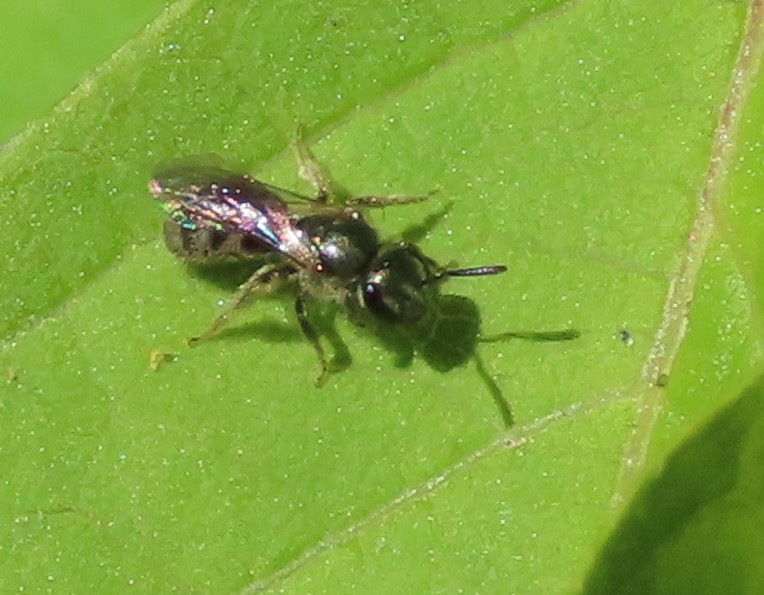
Sweat bee, Lasioglossum (Dialictus) sp.
Mining bee, Andrena sp.
Nomad cuckoo bee, Nomada sp.

Sawflies and wasps were more challenging to find, and photograph, but I was happy to see any at all.

Mason wasp, Ancistrocerus sp.
Eastern Yellowjacket queen, Vespula maculifrons
Ichneumon wasp, Erigorgus sp.
Spider wasp, Priocnemis minorata
Unidentified sawfly, family Tenthredinidae
Nocturnal ichneumon wasp, Netelia sp.

I only managed to find two kinds of grasshoppers, representing pygmy grasshoppers and short-horned grasshoppers.

Pygmy grasshopper, family Tetrigidae
Green-striped Grasshopper, Chortophaga viridifasciata

Did you know that cockroaches and termites are now classified in the same order? I uncovered both kinds of insects by turning over boards and chunks of wood from logs and limbs.

Eastern Subterranean Termite, Reticulitermes flavipes
Wood cockroach nymph, Parcoblatta sp.

Spiders were surprisingly abundant and diverse, representing several families of web-weavers, ambush hunters, and active predators.

Antmimic spider, Castianeira sp.
Orbweaver, Gea heptagon
Triangulate Cobweb Weaver, Steatoda triangulosa
Brown Recluse, male, Loxosceles reclusa
Crab spider, Mecaphesa sp.
Hammock weaver, Pityohyphantes sp.

Overall, this year's City Nature Challenge was an exciting exercise in discovery and sharing. Thanks to all who participated, in every city, and to iNaturalist (my observations in the hyperlink) for providing the platform to register individual projects and record the observations. I'm already looking forward to the 2024 edition.