Showing posts with label federal government. Show all posts

Thursday, December 21, 2017

Insects in the News

One of my unfortunate duties as a blogger of truth and science, here and at Sense of Misplaced, is that I must occasionally dispense bad news. There are plenty of awful stories these days, but bear with me and I'll conclude with something uplifting.

The insect story getting the most press right now, by far, is the "Insect Armageddon" opinion piece in the New York Times, and the follow-up article about the German citizen scientists who made the observations. It appears that there has been a precipitous decline in insect abundance in many parts of Europe, up to 75% over the last twenty-five years. Should the numbers hold up to repetition, this is indeed alarming, if not catastrophic. Insects are the foundation of all major biological processes. You can do the math, use your imagination, and draw the obvious conclusions.

There are plenty of places to point blame for the demise of insect populations, and wildlife declines in general, but accusations and rhetoric are not likely to reverse the course of events. We have to act personally, and locally, to go about changing things for the positive. That means resisting the urge to grab the over-the-counter insecticides, planting native trees, shrubs, and flowers in our urban and suburban landscapes, growing our own vegetables without using chemical treatments, putting up "bee condos" for solitary bees....There is no end to what we can do, and it does make a difference. You are setting an example, for one thing.

jAmerican Burying Beetle, © EcoArkansas.com

Meanwhile, our very own government agencies are against us here in the U.S. Make no mistake about it, the current edition of the federal administration is out to ruin public lands in many ways. I already wrote about U.S. Fish & Wildlife granting permission for the construction of a strip mall known as "Coral Reef Commons" on globally endangered pine rockland habitat near Miami, Florida. The President's directive to shrink Bears Ears National Monument and Grand Staircase-Escalante National Monument is further proof of the overriding policy to open public lands to private interests, namely those in the natural resource extraction industries.

It is also quite probable that a lawsuit filed by The Independent Petroleum Association of America, American Stewards of Liberty, and Osage Producers Association will result in the de-listing of the endangered American Burying Beetle, Nicrophorus americanus. This is in spite of the fact that there is grave concern as to whether the species is truly "recovered." It is found only in a handful of isolated locations whereas its historical range was over most of the eastern U.S. It also remains largely a mystery as to why it disappeared in the first place. Until a better understanding is reached, any action toward removing the species from the endangered list is premature at best, and irresponsible at the least. God forbid any creature, Native American population, or other sacred entity stand in the way of short-term profits for greedy corporations.

Oh, well, two can play the lawsuit game, and recently the National Butterfly Center in Mission, Texas filed suit against the federal government to block construction of the border wall, which would cut right through that private preserve. Take that! I have visited this area and can attest to the rich diversity of all organisms there, thanks to the caretakers who are so devoted to it. Many, if not most, United States records for mostly Mexican butterfly species are recorded from the National Butterfly Center. It is on every naturalist's bucket list of places to visit. A wall cannot be erected there, or through the Santa Ana National Wildlife Refuge....

Bee-mimicking clearwing moth, Heterosphecia tawonoides, © Marta Skowron Volponi

Ok, I promised some good news, and here it is. It was recently revealed that a spectacular species of clearwing moth was rediscovered after a gap of 130 years in the scientific record. Known previously from only a single specimen housed in a museum in Vienna, Austria, Heterosphecia tawonoides was observed in the Taman Nagara rainforest of Malaysia. It just goes to show how little we know about a planet we are hell bent on destroying in the name of "progress."

Resolve for the new year to get involved, get outdoors, document, record, and report what you find. You never know where your personal discoveries will lead; or whether you are the only thing standing between a lone population of some creature and its potential extirpation. I'm facing that right now myself, but more on that later.

Saturday, December 9, 2017

Losing the Pine Rocklands

It has not been my intent to deprive you of new content on this blog, but personal realities have dictated that I put my energies elsewhere, or have actively blocked my creative mindset. My internal motivations have been dealt devastating blows by external events that leave me wondering if I am making a difference. Meanwhile, I still deal with financial struggles and my aging father's circumstances.

The last (or at least latest) straw is what happened this week with U.S. Fish & Wildlife approving construction of a Walmart and strip mall on one of the last large parcels of imperiled pine rocklands habitat near Miami, Florida. Bulldozers began their devastation on Thursday, but thanks to a lawsuit by the Center for Biological Diversity, and a court order issued by heroic U.S. District Judge Ursula Mancusi Ungaro, the engines of destruction have been shut off, at least for the time being.

The Atala butterfly, © Jaret C. Daniels

This dire situation, to be fair, is the end result of poor management by a number of property players. According to Save The Pine Rocklands, the Richmond pine rockland tract was formerly owned by the University of Miami, which acquired the area for free as military surplus land, in 1981 and 1997. The university then sold eighty-eight acres, for $22 million, to Ram Realty Services in 2014. It is Ram that is behind the "Coral Reef Commons" project that would include a Walmart, LA Fitness, Chick-fil-A, and Chili's; plus a 900-unit apartment complex. A mere 40 acres would be spared as a "preserve."

Since this habitat depends on regular fire events for its existence, one has to wonder how apartment residents and business patrons would tolerate prescribed burns for ecosystem maintenance. That is not to mention whether the forty acres falls below some minimal territorial threshold for which a species could no longer survive. It also bears consideration whether pressure for continued economic development would not eventually compromise the rest of the property. You did it once, so you have set a precedent.

Miami Tiger Beetle, © Chris Wirth at Cicindela@wordpress.com

The pine rocklands are home to a diverse and unique assemblage of organisms, including critically endangered species. Among those are the Miami Tiger Beetle, Cicindelidia floridana, found nowhere else on Earth. The Atala (Eumaeus atala) and Bartram's Scrub-hairstreak (Strymon acis), both butterflies, also exist in no other ecosystem. Florida Bonneted Bat is also at risk. Thirty-one plant species occur there exclusively; and a total of nine federally endangered species call the pine rocklands home.

This is just the latest crime against our natural heritage as the President and his appointees go about dismantling all environmental, consumer, and labor protections for the benefit of an extreme minority of extremely wealthy individuals and corporations. This not politics, it is policy. Very, very bad policy that will negatively impact you, personally, at some point.

Bartram's Scub-hairstreak butterfly, courtesy of U.S. Fish & Wildlife Service and Biodiversity.org

The recent actions by the U.S. Department of the Interior, where the National Park Service and U.S. Fish & Wildlife agencies reside, have been decried as "dereliction of duty," but that is being too polite. This is outright theft of public lands and should be prosecuted as such. It is not failure to fulfill institutional mandates, it is criminal behavior.

I pride myself on presenting you with an unbiased, apolitical blog here, but I have my limits of tolerance. Those limits have been vastly exceeded over the last few months, and I do not foresee improvement any time soon. I hope you will respect my personal desire to protect your right to your "pursuit of happiness" as it involves observing and enjoying the natural world in intact ecosystems. I also urge you to stay silent no longer. Thank you.

Friday, March 18, 2016

National Science Foundation Suspends Funding Support for Biological Collections

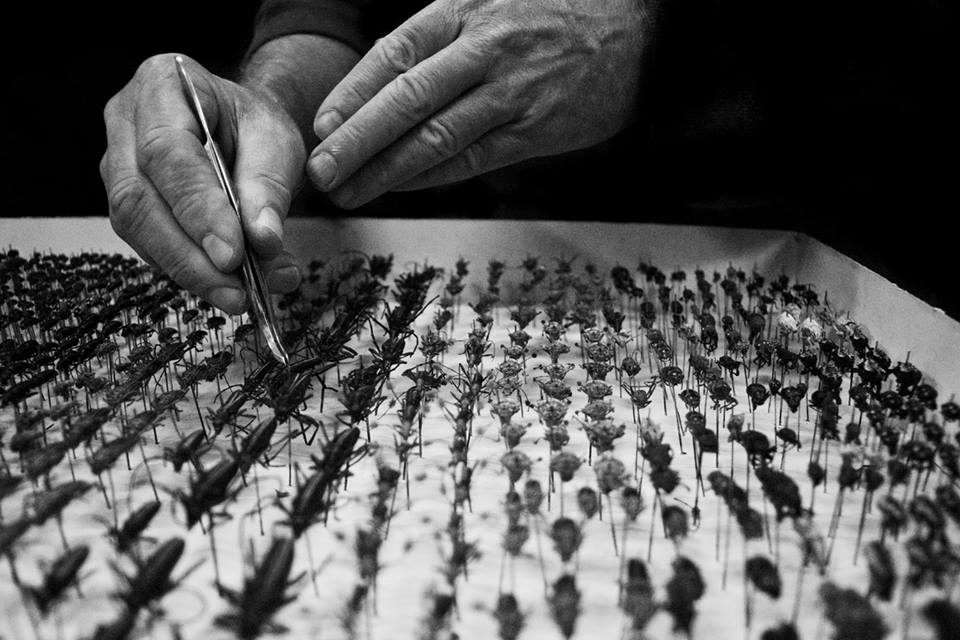
I try to avoid issue-related topics here, but this recent development could potentially undermine the foundation of what I do. Researching the subjects of this blog requires that I consult almost daily with personnel associated with entomology collections all over the country. It has just been announced that the primary source of funding for many of these holdings will not be accepting any new applications for fiscal year 2017. The following is meant to inform my readers of who the players are, and how to make your voices heard.

© Natural Science Collections Association (UK)
The Players

Here is a list of recurring acronyms that should prove helpful if you find yourself getting confused.

  • NSF - National Science Foundation
  • CSBR - Collections in Support of Biological Research. This is the NSF grant program being placed on "hiatus" by the NSF.
  • BIO - Directorate for Biological Sciences, one administrative arm of NSF
  • DBI - Biological Infrastructure, the funding component of the BIO
  • STEM - Science, Technology, Engineering, and Math education
  • AIBS - American Institute of Biological Sciences
  • SPNHC - Society for the Preservation of Natural History Collections
  • NSCA - Natural Science Collections Alliance
  • ECN - Entomological Collections Network
  • ESA - Entomological Society of America

What will happen?

My sources tell me this is not an unusual event. National Science Foundation periodically evaluates programs to assess their efficacy and impact, and suspending new applications for funding is more or less standard procedure during such an "audit." However, there is the possibility that the outcome of an evaluation could be the reduction or elimination of a program. That is why it is imperative that stakeholders speak to the importance of biological collections, but do so effectively.

Meanwhile, according to Reed Beaman of the CSBR:

"In FY 2017, BIO plans to assess the effectiveness of current DBI programs towards the evolving needs of the biology community, which have become more complex, diverse, and centered on data storage, access, and analysis. Evaluating current programs, assessing where investments can make a difference in the long term resource needs, and developing a robust STEM pipeline will be a priority. BIO will use FY 2017 to reexamine the goals and objectives of many of DBI’s longstanding research resource and human resource programs. Emphasis will be placed on evaluation, impact, and scalability, to gauge where support from BIO makes a difference and can be leveraged. Several programs will be put on a biennial competition schedule during their assessment and evaluation. BIO expects this assessment to be complete in time to inform the FY 2018 budget."

© Natural Science Collections Association (UK)
Crafting constructive feedback

Should you be a member of an organization such as the ECN, ESA, SPNHC, or NSCA, please consult your officers and fellow members for how best to proceed so that a united front is presented. Individuals should consider the following suggestions from Dr. Michael Ivie, Montana State University:

:

"First, keep in mind that NSF's Federally mandated job is to support leading edge science. Comments like the one on the DBI Blog site that starts out about cultural patrimony will only contribute to the idea we are antiquated and no longer relevant to modern science. Patrimony and history, and wonderful specimens kept safe are not what is important here. Keep comments limited to the impact of the collections served by the CSBR program on innovative SCIENCE. Second, NSF supports non-Federal research. All comments are valuable, but community comments should be led by the scientists who are NSF targets. Third, do not lead with the self-serving. This program is about Infrastructure impact,not about how the program allows the collection itself to be better. Get people not associated with the collection to write and tell stories of how they use the collections. How the collection is critical to training STEM scientists, how the data (specimens) housed there contributed to innovative research findings and provided impactful benefit. Tell stories about how a collection improvement grant led to the discovery of something, anything. How many extra loans to projects supported by NSF were made, how many new species were discovered because of bringing backlogs into the available pool of infrastructure.

Every supporting letter from people outside the collection community is worth two from inside. That does not mean we don't write, and our groups don't lobby, but it does mean we need to reach out. We need to swamp this issue with positive examples of impact on NSF supported science areas. The project impacted does not need to be actually NSF funded, but within an area that NSF funds. Citing the NSF program areas that are impacted by this infrastructure is critical. Writing letters is only half the battle, writing smart letters is what wins."

Where to write

The NSF is accepting comments through only two avenues. One is through this e-mail address:
DBICSBRatNSF.GOV
Remember to replace "at" with "@" to properly send your correspondence.

The other means of communication is by leaving comments on the DBI blog.

© Norma Salcedo, image of Grice Marine Laboratory in Charleston, South Carolina

Watch this space for further developments. Meanwhile, please feel free to "share," mention, or steal this post, whatever it takes to get the word out. This obviously affects every kind of biological collection, so remember to alert botanists, herpetologists, mammologists, and pretty much every other "ologist" community. Thank you.