Showing posts with label government. Show all posts

Sunday, March 8, 2020

Pesticide Preemption: Another Tool for Industry to Protect Itself

Fortunately, entomology and politics don’t collide often, but when they do it is my duty to inform my followers of the potential impacts. While attending the Landscaping With Colorado Native Plants Conference in Denver last Saturday, I learned of something that sounded vaguely familiar, but never knew the name for it. It is called preemptive legislation, and it is a political tactic designed to thwart everything from local bans on plastic bags to, it turns out, local regulation of pesticide applications. It is likely that this will be coming to your state, too, if it is not already enacted. This is, in my opinion, part of a larger agenda.

© USDA Forest Service Region 8, Bugwood.org

A little background is in order. The licensing and labeling of pesticides in use in the U.S.A. is the domain of the Environmental Protection Agency (EPA) as prescribed by the Federal Insecticide Fungicide and Rodenticide Act (FIFRA) passed in 1910. In 1972, Congress turned it into a full-blown regulatory statute, while leaving at least some enforcement powers at the state level. Enter Wisconsin Public Intervenor, et al. v. Mortier, et al. in the Wisconsin Supreme Court in 1991. Mortier had applied to their local municipality for permission to spray on private land. Permission was denied, the court case ensued, and judgment concluded that FIFRA does not expressly prohibit local government from instituting its own, complementary regulatory policy concerning pesticide use.

Since that decision, most states have elected to enact preemptive legislation to deny local jurisdictions the ability to draw up their own policies. Right now, forty-four (44) states have such rules, including my current state of residence, Colorado. Not surprisingly, the National Pest Management Association, and other industry organizations, are just fine with this. One of our state senators is looking to change that.

What is wrong with states having sole discretionary authority in pesticide choices and applications? Perhaps nothing, but increasing concerns over environmental toxins, and frustrations over lack of local control in general, are driving a movement to repeal or at least amend such powers of state authority. The public is finding agricultural and landscaping practices to be contributing to perceived declines in pollinator diversity and abundance, and compromising biodiversity in general.

© Eugene E. Nelson, Bugwood.org

Oddly, scientific skepticism and believers in science arrive at roughly the same conclusion on this issue: we no longer have trust in the idea that chemicals, or any product or service, are the sole avenues for solving every problem we create. Chemical applications are easy, no question, and this goes for fertilizers, too. These “cosmetic applications” are necessary to sustain lawns, and exotic trees, shrubs, and flowers that do not naturally occur in every climate, nor prosper in every kind of soil. Here in the arid west, they also require too much water.

Beyond the inertia of industries that are thriving under the status quo of their methodology, reaping profits all along the way, there are property values and liability to consider, at least in cities and suburbs. Shifting to new standards of appropriate “wildness,” with at least a minimum threshold for native plants in landscaping and a reduced lawnscape, will be challenging. Our assessment of acceptable risk will have to change in accordance with our desire to relieve pressure on native ecosystems from inappropriate developments.

© Eugene E. Nelson, Bugwood.org

Right now, Colorado Springs is in the process of soliciting public input to revise its chapter seven codes, which means updating its zoning ordinances. This includes landscaping standards. I would strongly advise participating in any similar engagement opportunity in your own municipality, as this is where you can make the strongest impact rather than reacting to individual developments as they present themselves. In another week the urban forestry plan will be unveiled at yet another public meeting, and inviting comment from attendees. It helps that I am in the loop a bit, to learn of these events and initiatives. Honestly, I am not certain how I got so fortunate, though I habitually put my e-mail address on anything related to local government.

You most certainly bring a unique perspective to your HOA, city, township, county, or other governing body. Raise your voice. Pester the nursery to start stocking native plants. Be an example to your neighbors. Conservation quite literally begins at home.

Sources:
Cornell Law School, Legal Information Institute.
National Pest Management Association
Centner, T.J. & Heric, D.C. 2019 "Anti-community state pesticide preemption laws prevent local governments from protecting people from harm," International Journal of Agricultural Sustainability, 1-9. doi: 10.1080/14735903.2019.1568814

Wednesday, January 30, 2019

R.I.P. LRGV?

Barring a miracle, construction of another segment of the U.S.-Mexico border wall will begin in the Lower Rio Grande River Valley (LRGV) in mid-February. Many people are under the mistaken notion that the President has not achieved his funding goal for the border barrier. While this is true, in part, funding for the segment running through Hidalgo and Starr Counties in Texas was approved in the omnibus bill passed in March, 2018. The habitat destruction this will cause is incalculable. It will also take place during the migratory bird breeding season. Wait, there is more.

The Rio Grande (Mexico in the middle) from the National Butterfly Center. If the wall goes up you will never have this view again.
© Heidi Eaton

To pave the way for the border wall in the legal sense, executive orders rescinded protections afforded by: The National Environmental Policy Act, the Endangered Species Act, The Federal Water Pollution Control Act (Clean Water Act), The Migratory Bird Treaty Act, The Archeological Resources Protection Act, The Solid Waste Disposal Act, The Historic Sites, Buildings, and Antiquities Act, The National Wildlife Refuge System Administration Act, and The Native American Graves Protection and Repatriation Act, among several other distinguished pieces of legislation (nearly thirty in total) that make this country truly great.

Band-winged Dragonlet at National Butterfly Center

Make no mistake, the construction of a border wall, or even a fence, would doom the economies and ecologies of the Lower Rio Grande Valley LRGV) in south Texas. Public and private lands alike would take the brunt of a closed border, effectively impoverishing every aspect of life in the region. I speak from having visited the area on three separate occasions. The map below shows what would be lost, effectively ceded to Mexico, south of that orange and yellow line. "What?!" you ask, "That is nowhere near the actual border!" Exactly. The true border is the Rio Grande River itself, but by law there can be no barrier constructed within the floodplain of the river. The wall will therefore be placed on existing levees on the U.S. side, far from the riverbank.

Map taken from "No Border Wall" post on Facebook

Among our favorite places in Texas is Bentsen-Rio Grande Valley State Park, a world-famous destination for tourists wishing to see birds, butterflies, dragonflies, and other watchable wildlife found nowhere else in the United States. The planned route for the border wall would exclude visitors from half of the current acreage, if the park even remained open to the public at all. This is what the average American does not seem to understand: The rights of American citizens will be denied as a result of this massive undertaking.

Black Setwing at National Butterfly Center

The National Butterfly Center, where new U.S. records for Mexican species are documented almost annually, will likewise be heavily compromised, and that is private property. Why Libertarians and others who hold private property in sacred esteem are not up in arms over this is beyond me. There was a lawsuit filed, but because all afforded protections were removed in the rescinded federal laws, the lawsuit was dismissed.

Were it not for persistent and vocal protests, the Santa Ana National Wildlife Refuge would already be bisected by the wall. For now it has received a temporary stay of execution (of wall construction). The refuge is a gem, with a variety of habitats and mind-blowing biodiversity from "bugs" to birds.

Altamira Oriole, Bentsen-Rio Grande Valley State Park, behind the right-of-way for the border wall

A border wall would have a devastating impact on wildlife, for even though birds could fly over the barrier, the habitat would be so fragmented by the structure and accompanying 150-foot "enforcement zone" that migrant wildlife would no longer have refuge in their travels; and resident wildlife would likewise be displaced. Meanwhile, have we learned nothing from the insidious networks of tunnels beneath our existing border barriers? Do we truly believe for an instant that "coyotes" will be deterred from their businesses of human trafficking and gun and drug running?

Opposition to a border wall can take many forms, and you are encouraged to pursue one or more of them:

  • Engage in in-person protests at various border locations.
  • Call, write, and e-mail your U.S. Representatives and Senators to express your outrage in polite but assertive language. Demand an immediate moratorium on further border barrier construction.
  • Bombard the White House with calls, e-mails, and letters.
  • Donate to the National Butterfly Center and other conservation organizations, and humanitarian non-profits that are fighting the border wall.
  • Continue visiting the border and infusing the local economies with your tourist dollars. Ask locals how best you can help them fight the wall. Tell locals who are in denial or who are misinformed that this is an urgent and critical situation that will adversely affect them.

Harlequin Flower Scarab, National Butterfly Center

Our current U.S. President is hell-bent on erecting a highly visible monument to his own fear of immigrants and refugees instead of enacting foreign and domestic policies that would defuse volatile relations with Mexico and Central America instead of igniting more fires. He insists on punishing law-abiding citizens in the U.S. instead of crafting more stringent laws against human trafficking, and expanding the currently overworked agencies charged with handling the deluge of legitimate refugees seeking asylum.

Foreign policy should address corrupt governments that lead to mass exodus, but we need the cooperation of our allies, the UN, and other international bodies that the President has turned his back on. We may even need more official ports of entry along the border so that the few currently in play are not overwhelmed, and adjacent lands between those posts can be patrolled more easily.

Bobcat at Bentsen-Rio Grande Valley State Park, behind where the border wall would go

We have by no means exhausted all our options with regard to immigration reform, but we will be taking a step backward by building a wall. We are literally robbing ourselves of precious and unique landscapes and ecosystems. Yes, Mr. President, a wall would be something concrete, literally if not figuratively, but what you personally gain from visibility you will lose by several orders of magnitude in credibility, both at home and abroad.

Saturday, December 9, 2017

Losing the Pine Rocklands

It has not been my intent to deprive you of new content on this blog, but personal realities have dictated that I put my energies elsewhere, or have actively blocked my creative mindset. My internal motivations have been dealt devastating blows by external events that leave me wondering if I am making a difference. Meanwhile, I still deal with financial struggles and my aging father's circumstances.

The last (or at least latest) straw is what happened this week with U.S. Fish & Wildlife approving construction of a Walmart and strip mall on one of the last large parcels of imperiled pine rocklands habitat near Miami, Florida. Bulldozers began their devastation on Thursday, but thanks to a lawsuit by the Center for Biological Diversity, and a court order issued by heroic U.S. District Judge Ursula Mancusi Ungaro, the engines of destruction have been shut off, at least for the time being.

The Atala butterfly, © Jaret C. Daniels

This dire situation, to be fair, is the end result of poor management by a number of property players. According to Save The Pine Rocklands, the Richmond pine rockland tract was formerly owned by the University of Miami, which acquired the area for free as military surplus land, in 1981 and 1997. The university then sold eighty-eight acres, for $22 million, to Ram Realty Services in 2014. It is Ram that is behind the "Coral Reef Commons" project that would include a Walmart, LA Fitness, Chick-fil-A, and Chili's; plus a 900-unit apartment complex. A mere 40 acres would be spared as a "preserve."

Since this habitat depends on regular fire events for its existence, one has to wonder how apartment residents and business patrons would tolerate prescribed burns for ecosystem maintenance. That is not to mention whether the forty acres falls below some minimal territorial threshold for which a species could no longer survive. It also bears consideration whether pressure for continued economic development would not eventually compromise the rest of the property. You did it once, so you have set a precedent.

Miami Tiger Beetle, © Chris Wirth at Cicindela@wordpress.com

The pine rocklands are home to a diverse and unique assemblage of organisms, including critically endangered species. Among those are the Miami Tiger Beetle, Cicindelidia floridana, found nowhere else on Earth. The Atala (Eumaeus atala) and Bartram's Scrub-hairstreak (Strymon acis), both butterflies, also exist in no other ecosystem. Florida Bonneted Bat is also at risk. Thirty-one plant species occur there exclusively; and a total of nine federally endangered species call the pine rocklands home.

This is just the latest crime against our natural heritage as the President and his appointees go about dismantling all environmental, consumer, and labor protections for the benefit of an extreme minority of extremely wealthy individuals and corporations. This not politics, it is policy. Very, very bad policy that will negatively impact you, personally, at some point.

Bartram's Scub-hairstreak butterfly, courtesy of U.S. Fish & Wildlife Service and Biodiversity.org

The recent actions by the U.S. Department of the Interior, where the National Park Service and U.S. Fish & Wildlife agencies reside, have been decried as "dereliction of duty," but that is being too polite. This is outright theft of public lands and should be prosecuted as such. It is not failure to fulfill institutional mandates, it is criminal behavior.

I pride myself on presenting you with an unbiased, apolitical blog here, but I have my limits of tolerance. Those limits have been vastly exceeded over the last few months, and I do not foresee improvement any time soon. I hope you will respect my personal desire to protect your right to your "pursuit of happiness" as it involves observing and enjoying the natural world in intact ecosystems. I also urge you to stay silent no longer. Thank you.

Friday, March 18, 2016

National Science Foundation Suspends Funding Support for Biological Collections

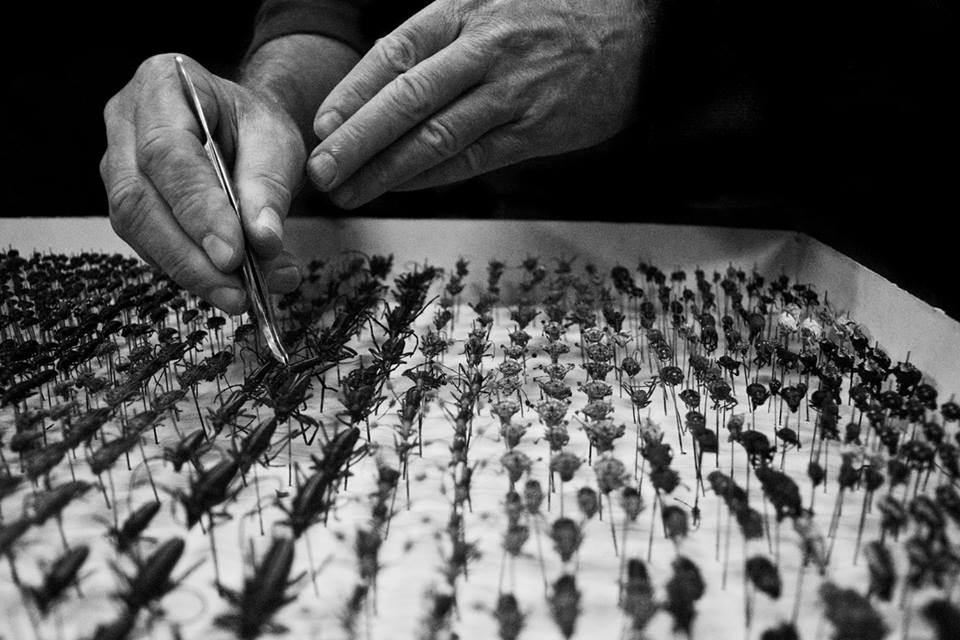
I try to avoid issue-related topics here, but this recent development could potentially undermine the foundation of what I do. Researching the subjects of this blog requires that I consult almost daily with personnel associated with entomology collections all over the country. It has just been announced that the primary source of funding for many of these holdings will not be accepting any new applications for fiscal year 2017. The following is meant to inform my readers of who the players are, and how to make your voices heard.

© Natural Science Collections Association (UK)
The Players

Here is a list of recurring acronyms that should prove helpful if you find yourself getting confused.

  • NSF - National Science Foundation
  • CSBR - Collections in Support of Biological Research. This is the NSF grant program being placed on "hiatus" by the NSF.
  • BIO - Directorate for Biological Sciences, one administrative arm of NSF
  • DBI - Biological Infrastructure, the funding component of the BIO
  • STEM - Science, Technology, Engineering, and Math education
  • AIBS - American Institute of Biological Sciences
  • SPNHC - Society for the Preservation of Natural History Collections
  • NSCA - Natural Science Collections Alliance
  • ECN - Entomological Collections Network
  • ESA - Entomological Society of America

What will happen?

My sources tell me this is not an unusual event. National Science Foundation periodically evaluates programs to assess their efficacy and impact, and suspending new applications for funding is more or less standard procedure during such an "audit." However, there is the possibility that the outcome of an evaluation could be the reduction or elimination of a program. That is why it is imperative that stakeholders speak to the importance of biological collections, but do so effectively.

Meanwhile, according to Reed Beaman of the CSBR:

"In FY 2017, BIO plans to assess the effectiveness of current DBI programs towards the evolving needs of the biology community, which have become more complex, diverse, and centered on data storage, access, and analysis. Evaluating current programs, assessing where investments can make a difference in the long term resource needs, and developing a robust STEM pipeline will be a priority. BIO will use FY 2017 to reexamine the goals and objectives of many of DBI’s longstanding research resource and human resource programs. Emphasis will be placed on evaluation, impact, and scalability, to gauge where support from BIO makes a difference and can be leveraged. Several programs will be put on a biennial competition schedule during their assessment and evaluation. BIO expects this assessment to be complete in time to inform the FY 2018 budget."

© Natural Science Collections Association (UK)
Crafting constructive feedback

Should you be a member of an organization such as the ECN, ESA, SPNHC, or NSCA, please consult your officers and fellow members for how best to proceed so that a united front is presented. Individuals should consider the following suggestions from Dr. Michael Ivie, Montana State University:

:

"First, keep in mind that NSF's Federally mandated job is to support leading edge science. Comments like the one on the DBI Blog site that starts out about cultural patrimony will only contribute to the idea we are antiquated and no longer relevant to modern science. Patrimony and history, and wonderful specimens kept safe are not what is important here. Keep comments limited to the impact of the collections served by the CSBR program on innovative SCIENCE. Second, NSF supports non-Federal research. All comments are valuable, but community comments should be led by the scientists who are NSF targets. Third, do not lead with the self-serving. This program is about Infrastructure impact,not about how the program allows the collection itself to be better. Get people not associated with the collection to write and tell stories of how they use the collections. How the collection is critical to training STEM scientists, how the data (specimens) housed there contributed to innovative research findings and provided impactful benefit. Tell stories about how a collection improvement grant led to the discovery of something, anything. How many extra loans to projects supported by NSF were made, how many new species were discovered because of bringing backlogs into the available pool of infrastructure.

Every supporting letter from people outside the collection community is worth two from inside. That does not mean we don't write, and our groups don't lobby, but it does mean we need to reach out. We need to swamp this issue with positive examples of impact on NSF supported science areas. The project impacted does not need to be actually NSF funded, but within an area that NSF funds. Citing the NSF program areas that are impacted by this infrastructure is critical. Writing letters is only half the battle, writing smart letters is what wins."

Where to write

The NSF is accepting comments through only two avenues. One is through this e-mail address:
DBICSBRatNSF.GOV
Remember to replace "at" with "@" to properly send your correspondence.

The other means of communication is by leaving comments on the DBI blog.

© Norma Salcedo, image of Grice Marine Laboratory in Charleston, South Carolina

Watch this space for further developments. Meanwhile, please feel free to "share," mention, or steal this post, whatever it takes to get the word out. This obviously affects every kind of biological collection, so remember to alert botanists, herpetologists, mammologists, and pretty much every other "ologist" community. Thank you.