Sunday, June 5, 2022

Wh-a-a-a-t? Another Red Spider?!

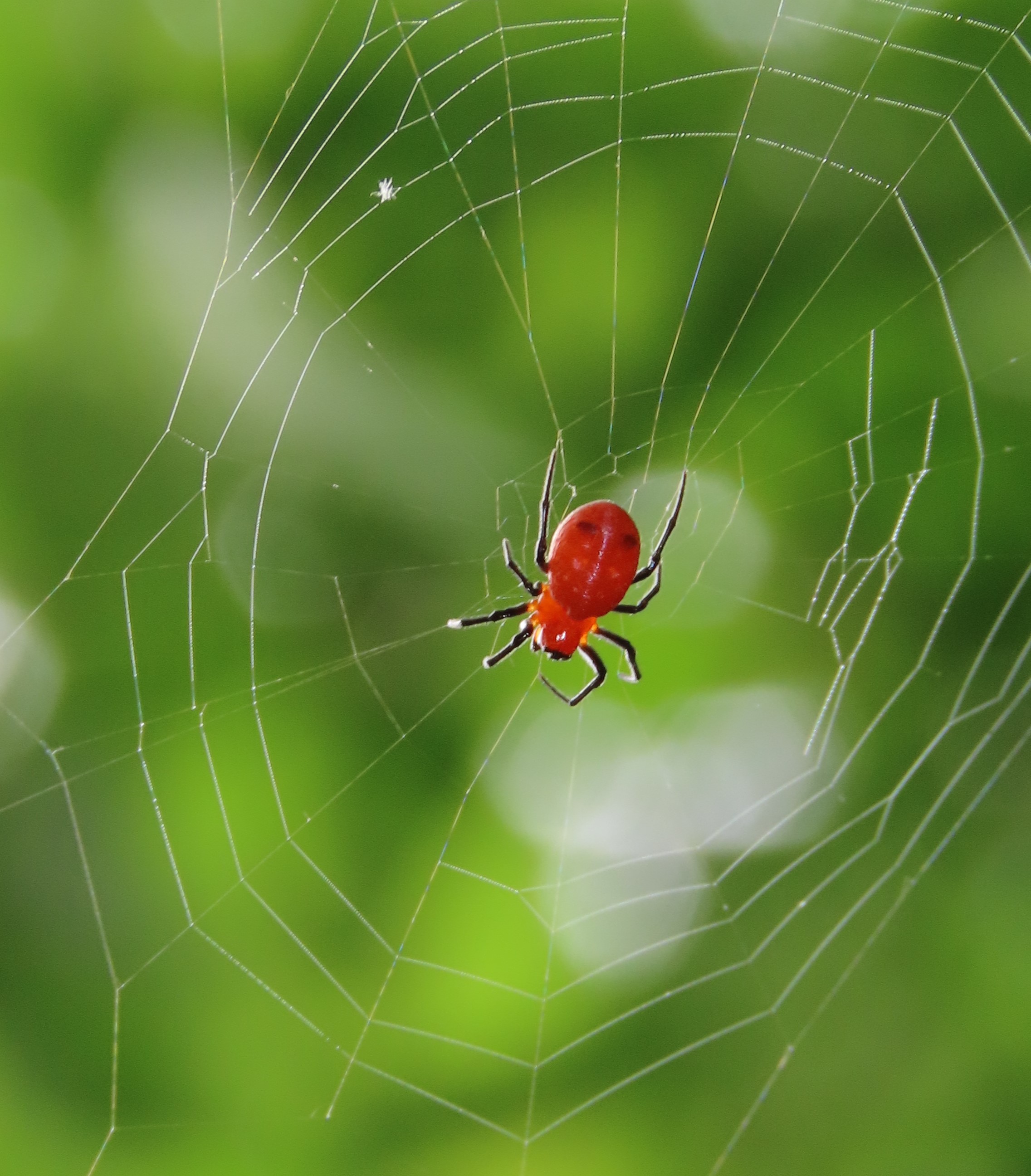
I am seeing a theme developing here. Last week I posted about a lovely little red spider I found in our back yard. Today, I bring you a slightly larger red spider that I spied at Graham Cave State Park in Missouri, USA. This one, Hypsosinga rubens, is an orbweaver, but because it spins its web in a horizontal plane, I initially mistook it for a female of the Scarlet Sheetweb Weaver.

A friend who was with me at the time I saw this diminutive beauty commented that she sees them all the time, and calls them "tomato spiders" because of their bright red color. Well, at only 7.4-8.7 millimeters in body length, maybe *cherry* tomato spider is a better name. The only common name I find is Rubens Orbweaver. Males of this species are smaller still, 6-6.5 millimeters, and they usually have a black abdomen.

There is great variability in color and pattern, or lack thereof, and a typical female from Florida has a white abdomen with small black markings. The Rubens Orbweaver occurs over most of eastern North America, but there are scattered records from the Prairie Provinces in Canada.

Beyond the bright color of this spider, the thing that surprised me was how ridiculously small its web was, stretched between a couple of leaves on a shrub at a little over waist-height. I expected her to drop out of the web if I approached too close or moved suddenly, but she stayed put in the hub of her snare. Information in the literature indicates that they may also shelter under bark on trees, or tuck themselves under leaf litter. I found mine along a forest edge, and forests are their preferred habitat.

Sources: Bradley, Richard A. 2013. Common Spiders of North America. Berkeley: University of California Press. 271 pp.
Hollenbeck, Jeff. 2007. "Species Hypsosinga rubens," Bugguide.net

Wednesday, June 1, 2022

Wasp Wednesday: Anastatus spp. Eupelmids

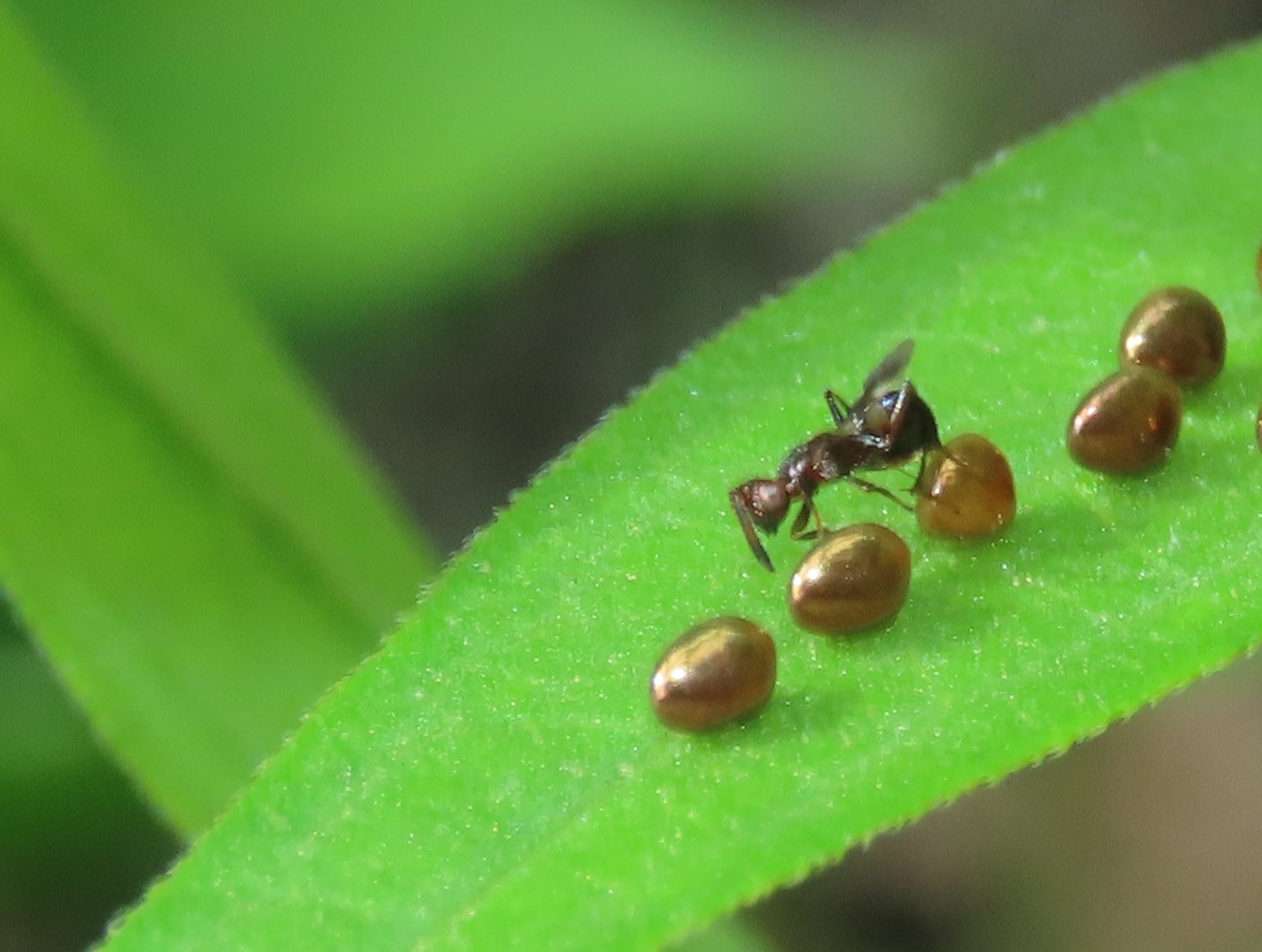
As is the case at least fifty percent of the time, we owe this post to my sharp-eyed partner, Heidi Eaton, who noticed a clutch of eggs laid by a true bug. Upon further inspection, she saw a tiny wasp meandering through the ova. The micro-wasp was indeed an egg parasitoid, in the family Eupelmidae, probably genus Anastatus. The drama took place in a glade habitat at Graham Cave State Park in north-central Missouri, USA, yesterday.

Measuring a host egg with her antennae.

Among the unique features of eupelmids in the subfamily Eupelminae are drastic sexual dimorphism, and stupendous leaping ability, as described in this edited passage by Gary Gibson on Bugguide:

Because of modifications to increase jumping ability the flight apparatus and consequently the ability of female eupelmines to fly has apparently been reduced. …One common name that was suggested for the group was "back-rolling wonders" because the jumps are so powerful [that the insects] tend to tumble on landing. Females prefer not to fly and will simply walk around until disturbed. Males, however, fly as readily as any other chalcidoid. It is possible that females were modified for jumping to enhance [their] ability to escape rapidly from predators such as ants and spiders….The jumping mechanism of females is….unlike other insects which use muscles inserted directly onto the legs to power jumping, Instead, very large dorso-longitudinal muscles in the thorax are used. When these muscles contract the thorax contorts, which changes a longitudinal force of action into a vertical force of action to power the middle legs for jumping. A result of this is that females often die in a U-like posture.

Dead female eupelmid in U-shaped posture after contraction of the jumping muscles

The energy for this instant athleticism is stored in large blacks of resilin, an elastic, rubber-like protein found in many jumping insects. What triggers the flood of energy is unknown, but it causes the muscles to contract, making the thorax suddenly shorter, which in turn pulls the basal segment of the middle leg inwards along a tendon-like muscle. A large spur on the tip of the tibia of the middle leg gives it purchase as it kicks off of the substrate (leaf, twig, or other surface).

There are approximately eighteen known species in the genus Anastatus in North America north of Mexico, and about 160 species globally. All have females with a distinct pattern of bands on the forewing, thought to enhance their mimicry of ants. The wings adhere close to the body when the insect is not flying, to the degree that at first glance the tiny wasps look to be wingless. The ovipositor is almost entirely concealed, which helps separate this genus from similar-looking genera.

Laying her egg inside the host egg.

At least two species have been introduced to this continent, one purposefully, the other accidentally. A. disparis was imported to aid in the control of the Spongy Moth (formerly known as the Gypsy Moth). A. tenuipes apparently arrived with its host, the Brown-banded Cockroach. The species we observed at Graham Cave was clearly one hosted by a true bug, likely in the family Coreidae (leaf-footed bugs). The female wasp inserts a single egg into the host egg, and her larval offspring will be an internal parasitoid of the developing host, ultimately killing it.

Wheel Bug eggs and newly-emerged nymphs.

Interestingly, earlier in the month, while at Fountain Creek Nature Center in Fountain, Colorado, I happened to notice an Anastatus female suspiciously close to a batch of hatching Wheel Bug eggs discovered by another member of our party. There is a eupelmid, Anastatus reduvii, that is a known parasite of Wheel Bug ova, so perhaps that was the unknown suspect.

Fleeing the scene of the crime? Female eupelmid suspiciously close to the Wheel Bug eggs.

Encountering parasitoid behavior in the field is a rather rare occurrence. Rearing the eggs of insects, especially those you can associate with an adult female insect, can add to our collective understanding of host-parasitoid relationships, and even result in the discovery of species new to science. In the case of Anastatus, many species are known only from females. In other cases, males are rare, and/or have not yet been associated with the conspecific females. We clearly have a lot to learn.

Sources: Burks, B.D. 1967. “The North American Species of Anastatus Motschulsky (Hymenoptera, Eupelmidae),” Trans. Amer. Ent. Soc. 93(4):423-432.
Universal Chalcidoidea Database
Eaton, Eric R. 2021. Wasps: The Astonishing Diversity of a Misunderstood Insect. Princeton, New Jersey: Princeton University Press. 256 pp.
Goulet, Henri and John T. Huber, editors. 1993. Hymenoptera of the World: An identification guide to families. Ottawa: Agriculture Canada. 668 pp.

Sunday, May 29, 2022

Spider Sunday: Scarlet Sheetweb Weaver

Exploring our modest property the other day I had the good fortune of encountering a small but striking spider on the exterior of our garage. It was a male Florinda coccinea, known as the Scarlet Sheetweb Weaver or Black-tailed Red Sheetweaver. At only 3-3.5 millimeters in body length, it is usually difficult to spot despite its bright red color, with black accents.

The males are generally more conspicuous than the females if only because they must travel to find one or more mates. They are shockingly agile for a species that is normally most at home in a silken snare. They appear acutely aware of motion, at least a large creature like myself, and I almost missed out on getting an image at all, as the spider dropped suddenly into foliage below.

Last fall, on October 8, 2021, my wife and I were on a morning neighborhood walk. A large group of bright orange mushrooms growing in a strip of lawn in a park caught our attention, which in turn led us to spot several small, dew-covered sheet webs in the grass. It is no wonder these spiders are so difficult to find. The silk of their webs is so fine that the sheets are nearly invisible unless coated in water droplets. We found both males and females in the webs, which makes me think this species may have more than one generation each year.

Curiously, most scientific references consider Florinda coccinea to be a mostly southeastern species, though it ranges north to at least Maryland and southern New Jersey, and west to Missouri and the eastern edge of Kansas. It might be expanding its range northward and westward, or simply be so inconspicuous to avoid detection by the few people out there seeking spiders. We collectively have much to learn about the actual geographic distributions of most arachnid species.

Florinda coccinea, a member of the family Linyphiidae, is identified by the black tubercle on the rear of the abdomen, a feature not seen in similarly-colored spiders. I also learned that they are exceptionally adept at feigning death when they perceive a threat. I was convinced my poor male was deceased or nearly so, but offered it a little water with the tip of an artist's paintbrush, and left the spider and the brush in a casserole dish overnight. The next morning the spider was much more lively, and after a quick photo session it was released outdoors.

Sources: Howell, W. Mike and Ronald L. Jenkins. 2004. Spiders of the Eastern United States: A Photographic Guide. Boston: Pearson Education. 363 pp.
Marshall, Sam, and G.B. Edwards. 2002.Florida's Fabulous Spiders. Tampa: World Publications. 65 pp.
Gaddy, L.L. 2009. Spiders of the Carolinas. Duluth, Minnesota: Kollath+Stensaas Publishing. 208 pp.
Kaston, B.J. 1972. How to Know the Spiders (Third Edition). Dubuque, Iowa: Wm. C. Brown Company Publishers. 272 pp.
Bradley, Richard A. 2013. Common Spiders of North America. Berkeley: University of California Press. 271 pp.

Wednesday, May 25, 2022

Wasp Wednesday: Southern Yellowjacket

Upon returning home last Thursday, I noticed the silhouette of what I thought was a paper wasp on the inside of one of the garage windows. It turned out to be something more exciting than that. Here in eastern Kansas, it is the time when female social wasps of all sorts are founding new colonies, or at least seeking a place to set up housekeeping. This individual is no exception, but she also has a devious alternative strategy she can use.

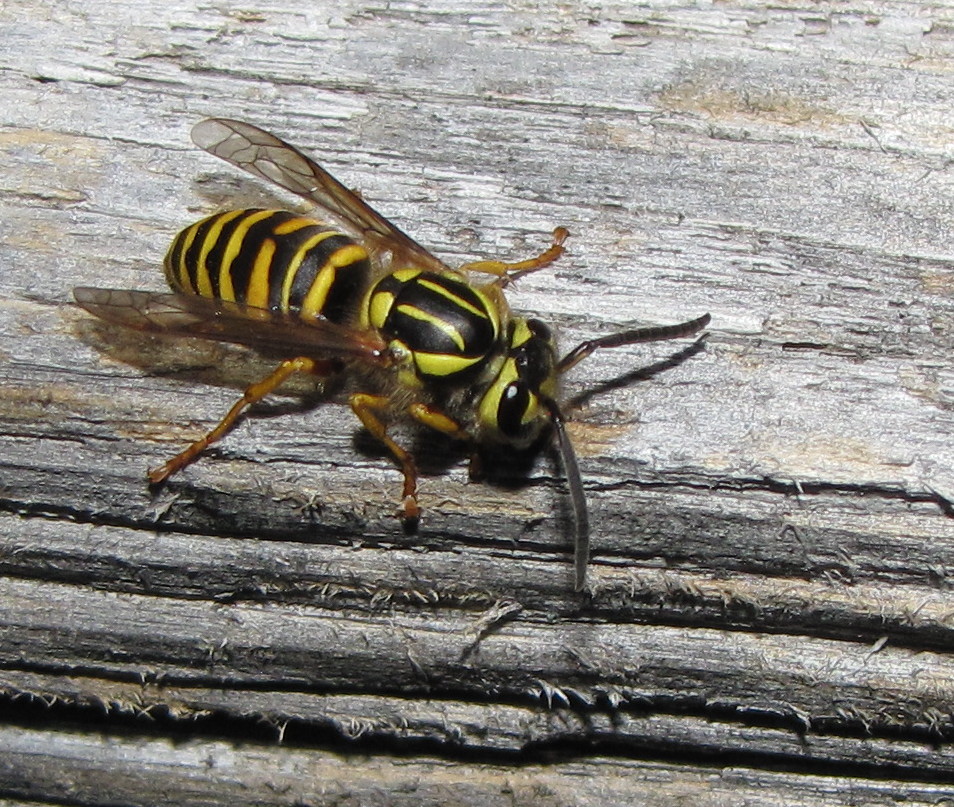
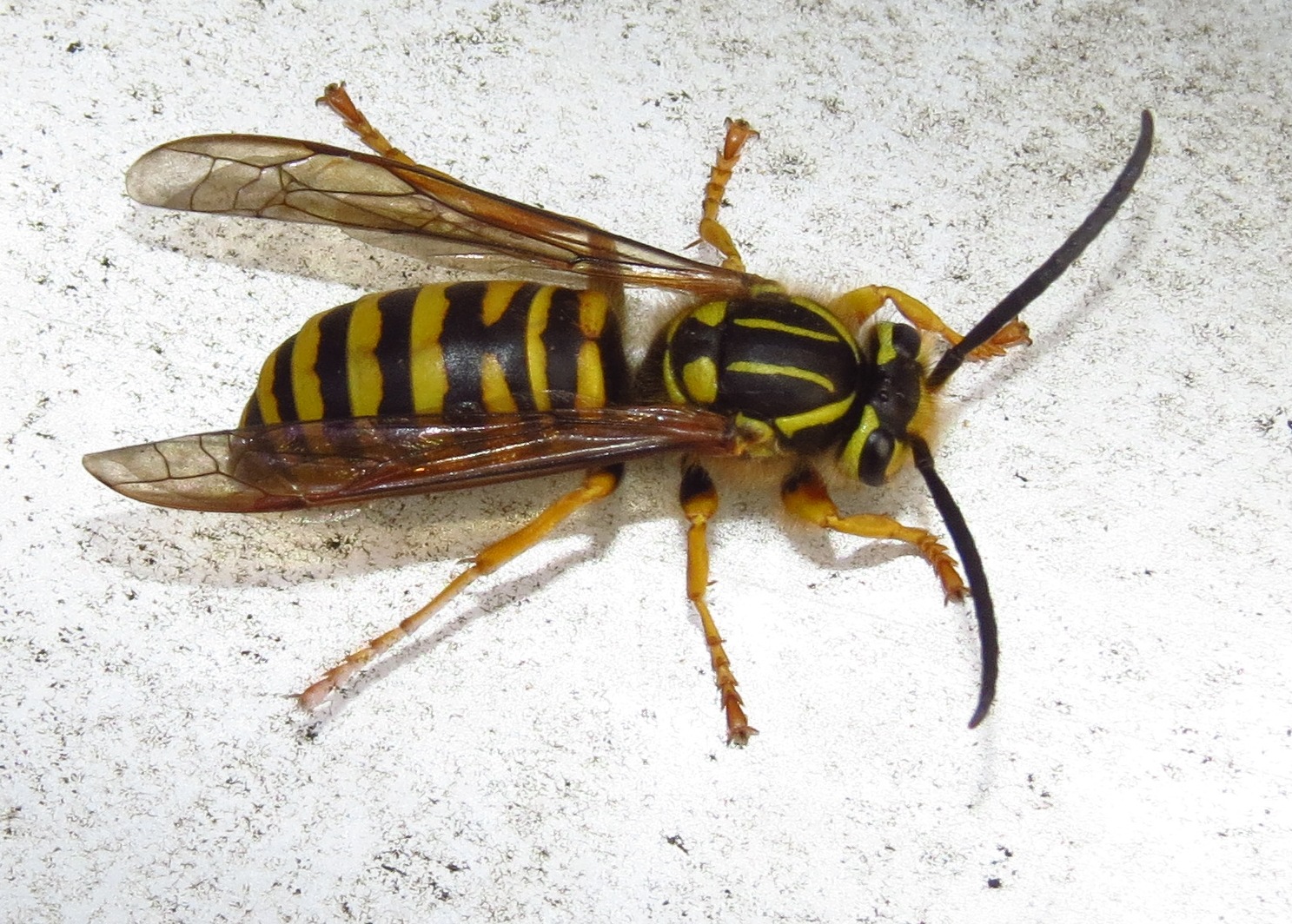
I gently captured the wasp in a plastic vial. In better light she was instantly recognizable as a queen of the Southern Yellowjacket, Vespula squamosa. This species is not quite as common as other species in eastern North America, so it was nice to have a chance to see one up close and finally get some respectable images of those muted ochre and yellow colors. As beautiful as these wasps are, their biology is even more fascinating and somewhat frightening.

Southern Yellowjacket is sometimes an "inquiline," a facultative social parasite of other yellowjacket species, namely the Eastern Yellowjacket, Vespula maculifrons, but also the Widow Yellowjacket, Vespula vidua. That is to say that while Southern Yellowjacket can exist like any normal, free-living yellowjacket species with a queen, worker caste, and males and new queens at the end of the colony life cycle, it can also hijack the colony of another species for its own benefit of free labor. Conversely, an obligate social parasite cannot exist on its own. It must successfully usurp a host nest. Obligate social parasites have no worker caste, only queens and males (in the case of yellowjackets).

Southern Yellowjacket worker from Ohio, USA

Competition for optimal, concealed nesting sites can be keen, so social parasitism may have evolved as one way to solve this problem. Eastern Yellowjackets typically nest in abandoned rodent burrows and similar cavities, but they can also nest in wall voids of human structures. It is telling that colonies of this species in disturbed habitats and urban and suburban locations appear to be the most vulnerable to being taken over by Southern Yellowjacket.

The Southern queen typically invades an embryonic nest of its host, dominating, evicting, or killing the resident queen. There may or may not be any host workers at the outset, but eventually the nest is converted entirely to Southern Yellowjacket workers. Evidence of the host remains in the differing architecture of the nest. Southern Yellowjacket is a significantly larger insect than Eastern Yellowjacket, so the cells in the paper combs of the nest differ accordingly.

Southern Yellowjacket male from Tennessee, USA

A mature nest of Southern Yellowjacket, persisting into late autumn, may contain an average of 5,000 cells. That is a lot of wasps! Southern Yellowjacket is not inherently more aggressive than most other yellowjacket species in defense of their nest, but more workers means a greater response to disturbance. You may want to inspect your yard carefully before using any powered tools that could cause vibrations and spark a yellowjacket offensive.

Southern Yellowjacket ranges from the Great Lakes to the Atlantic coast south of New England, to Florida, and west to Iowa, Kansas, and most of eastern Texas. It also occurs in southern Mexico and Guatemala, making it quite literally our southernmost species of yellowjacket.

Sources: Akre, R.D., A. Greene, J.F. MacDonald, P.J. Landolt, and H.G. Davis. 1980. Yellowjackets of America North of Mexico. U.S. Department of Agriculture, Agricultural Handbook No. 552, 102 pp.
Kratzer, Chris Alice. 2022. The Social Wasps of North America. Frenchtown, New Jersey: Owlfly Publishing, LLC. 417 pp.