Friday, May 12, 2023

City Nature Challenge 2023 Recap

Pearl Crescent butterfly, Phyciodes tharos

Here, in our neck of the woods in Leavenworth, Kansas, USA, the 2023 City Nature Challenge was, well, challenging. Our county is part of the Greater Kansas City Metro as defined for the City Nature Challenge. Besides unseasonably cool temperatures, and viciously windy weather, there was the competition of the National Football League draft in downtown Kansas City, Missouri. Despite those circumstances, the results were excellent.

I kept an eye out for birds, too, like this Red-tailed Hawk

There were 294 "observers," or people who recorded observations of flora and fauna, making a total of 3,640 sightings, beginning Friday, April 28, and ending May 1 (Friday through Monday). Currently, the observations represent 807 species, and climbing, thanks to the work of more than 300 "identifiers," people proficient in the identification of various organisms. This is an increase over last year's totals of 239 observers making 1,944 observations of 651 species.

A tiny lace bug, Corythucha sp.

Personally, I ventured out only Friday, April 28, and Monday, May 1, both very windy days. We also put out a blacklight and sheet in the back yard the night of May 1 to see what night-flying insects we could attract. We had an invitation to make observations in Topeka, a non-participating city, on Saturday, April 29, which was of course the best weather day in the span of the event.

Plants and fungi accounted for about half the total observations. Over half the animal observations were insects and arachnids.

Cute and camouflaged Blanchard's Cricket Frog

Most of my own observations were in Havens Park, the only "wild" park within walking distance of our home. My partner, Heidi, needs our car for work. Havens has lawns with a few trees, plus extensive oak-hickory forests, and glades dominated by Eastern Red Cedar at the summit of the park. The area has been abused by illegal dumping, and was notorious as a place for drug deals, but these crimes have subsided drastically. Illegal off-road vehicle traffic remains a problem, with the resulting erosion and gouging of the landscape. I see few people on any of the trails, including paved biking and walking trails, but I am usually there on weekdays.

An assassin bug, Sinea sp, in waiting

I found a surprising diversity of butterflies in spite of the periodic strong wind gusts. It helped that a few flowers were blooming, and there were some mud puddles persisting from previous rain.

Eastern Tailed-blue butterfly
Juvenal's Duskywing skipper, Erynnis juvenalis
Gray Hairstreak, Strymon melinus
Red Admiral, Vanessa atalanta
American Lady, Vanessa virginiensis
Juniper Hairstreak, Callophrys gryneus
Questionmark butterfly, Polygonia interrogationis

Few moths were seen, though turning on our porch light on one night, and deploying a blacklight on another, helped to reveal them.

Unidentified geometer moth
Tiny ribbed cocoon-maker moth, Bucculatrix sp.
A phycitine knot-horned moth, family Pyralidae
Celery Leaftier Moth, Udea rubigalis

The most diverse and conspicuous insects were flies, with several families represented.
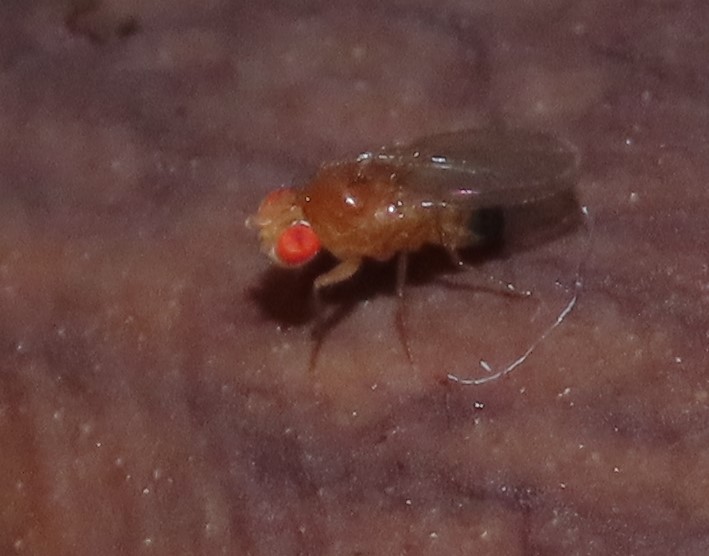
Drosophila sp. pomace fly in the kitchen
Large Bee Fly, Bombylius major
Root maggot fly, Eutrichota sp
Shore fly, Brachydeutera sp., on the surface of a mud puddle
Shiny Bluebottle Fly, Cynomya cadaverina
Pufftail flower fly, Sphegina sp.
Narrow-headed Marsh Fly, Helophilus fasciatus
Blue-green Bottle Fly, Lucilia coerulieviridis
Muscid fly, Lispe sp.

Beetles were disappointingly scarce for the most part. Even lady beetles were mostly absent. Next year, I might try putting out pitfall traps.

Two-lined Soldier Beetle, Atalantycha bilineata
Striped Cucumber Beetle, Acalymma vittatum
Jewel beetle, Dicerca lurida
Rove beetle, Lathropinus picipes?

Springtime is bee season, and they did not disappoint. Most families were present, representing several genera. Some, like large carpenter bees, I was unable to get images of.

Non-native mason bee, Osmia taurus
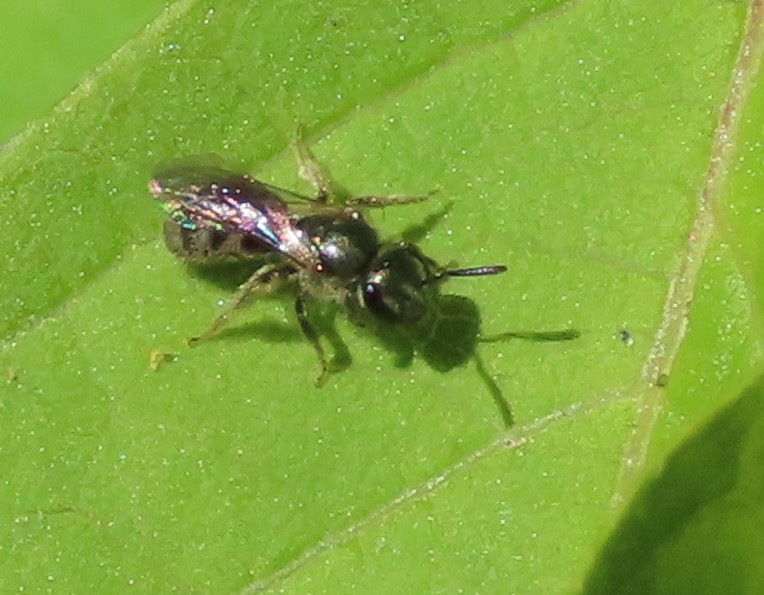
Sweat bee, Lasioglossum (Dialictus) sp.
Mining bee, Andrena sp.
Nomad cuckoo bee, Nomada sp.

Sawflies and wasps were more challenging to find, and photograph, but I was happy to see any at all.

Mason wasp, Ancistrocerus sp.
Eastern Yellowjacket queen, Vespula maculifrons
Ichneumon wasp, Erigorgus sp.
Spider wasp, Priocnemis minorata
Unidentified sawfly, family Tenthredinidae
Nocturnal ichneumon wasp, Netelia sp.

I only managed to find two kinds of grasshoppers, representing pygmy grasshoppers and short-horned grasshoppers.

Pygmy grasshopper, family Tetrigidae
Green-striped Grasshopper, Chortophaga viridifasciata

Did you know that cockroaches and termites are now classified in the same order? I uncovered both kinds of insects by turning over boards and chunks of wood from logs and limbs.

Eastern Subterranean Termite, Reticulitermes flavipes
Wood cockroach nymph, Parcoblatta sp.

Spiders were surprisingly abundant and diverse, representing several families of web-weavers, ambush hunters, and active predators.

Antmimic spider, Castianeira sp.
Orbweaver, Gea heptagon
Triangulate Cobweb Weaver, Steatoda triangulosa
Brown Recluse, male, Loxosceles reclusa
Crab spider, Mecaphesa sp.
Hammock weaver, Pityohyphantes sp.

Overall, this year's City Nature Challenge was an exciting exercise in discovery and sharing. Thanks to all who participated, in every city, and to iNaturalist (my observations in the hyperlink) for providing the platform to register individual projects and record the observations. I'm already looking forward to the 2024 edition.

Tuesday, March 28, 2023

Strange Flies on a Fish Carcass

Spring has been dragging her heels here in northeast Kansas, USA, but my partner and I managed a brief outing to take advantage of a certifiably warm and sunny day this past Saturday. Finally, there were a few insects to be seen, even if they were mostly non-biting midges, a few other flies, one butterfly, and several Eastern Boxelder Bugs. Heidi spotted the remains of a large fish just off the trail, and I noticed some small, unusual flies dashing over the head of the dead piscine. I managed a few images, and saw that I had something unfamiliar and pretty interesting.

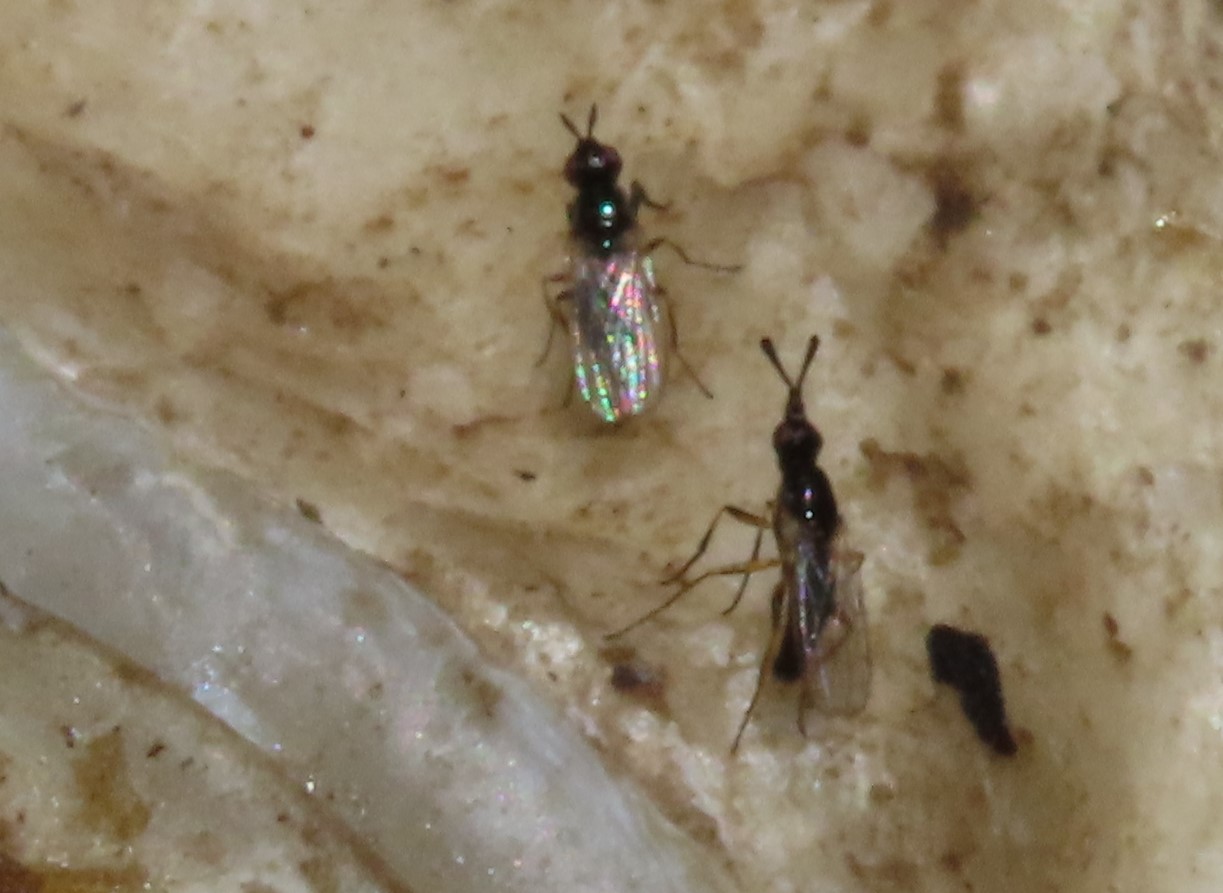
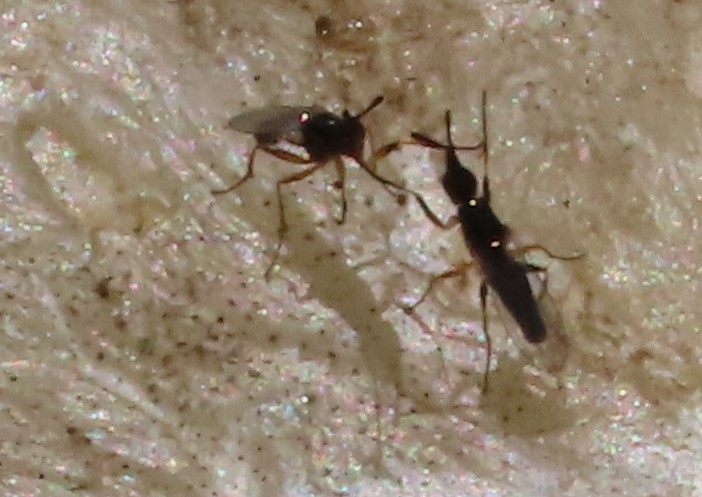
One female (top, left) and two male waltzing flies

The location of our short hike was the Mill Creek Streamway Park in Johnson County, Kansas, north of Shawnee Mission Park. We were on Nelson Island in the Kansas River for most of the time, and that is where we found the fish remains. The overstory was mostly cottonwood trees, the understory just beginning to green up.

A blow fly and at least two waltzing flies

There were the obligatory blow flies on the fish, too. I suspect the deep metallic blue insects were either Phormia or Protophormia. Without collecting specimens, fly identification is problematic. It comes down to patterns of setae, the color of thoracid spiracles, and other miniscule characters that are not usually visible in mere photographs of wild, mostly moving targets.

The smaller flies were another matter. They were so unique that once I returned home I was immediately able to identify them to species. More importantly, I learned about their bizarre behavior. About twice the size of your average kitchen-inhabiting "fruit fly," Drosophila sp., these flies were slender and long-legged, the better for running around and chasing each other, as was apparent in the field.

Male waltzing fly

Surprisingly, my hunch that they were members of the "skipper flies" family Piophilidae was correct. The most famous members of the family are the cheese skippers, named for the "jumping" maggots that infest rancid cheese, "skipping" away from danger by grasping their rear end in their mouths and suddenly releasing it, catapulting themselves vertically and horizontally. As a whole, the larvae of most species feed on decomposing fatty tissues in carrion, often after the corpse begins drying out.

Female (top) and male waltzing flies

The flies I had been observing were "waltzing flies" of the species Prochyliza xanthostoma. Their most distinguishing aspect is the sexual dimorphism between males and females. Males have greatly elongated heads, with a torpedo-shaped face and remarkably long atennae originating from the tip of the cone. Females are more....demure, or at least less comical in appareance, with a head of more normal dimensions.

Why the long face on the males? Stephen A. Marshall, in his epic tome Flies: The Natural History and Diversity of Diptera, explains:

"One of my favorite piophilines is Prochyliza xanthostoma, a Nearctic species that appears in abundance in early spring when melting snow exposes the carcasses of winter-killed animals. Males of P. xanthostoma have long antennae and a greatly elongated head that is used in ritual male-male battles for territory, during which these striking insects stand on their hind legs and engage in vigorous head-butting contests."

Dr. Erica McAlister, in her fascinating book The Secret Life of Flies, also notes the ferocity of these sparring matches:

"The males in another of the group, the waltzing fly, Prochyliza xanthostoma, have quite wonderful heads - almost conical in shape with very large and thick antennae - and they feed on animal carcasses. As their name suggests the males dance to woo the females. But they also have to defend their territories (carcasses) from other males and can have the most amazing fist fights - they really reign down punches on each other.

A female ignoring two competing males

I am now regretting not to have taken a video or two while I was there, though Heidi had long since made her way far ahead of me on the trail. Should I encounter waltzing flies again, I won't make that error of omission. Meanwhile, you might want to search for them. The species occurs over most of North America, especially the eastern half of the continent. If you are sufficiently intrigued, this Wikipedia article goes into extraordinary detail about the behavior and biology of the species.

Thursday, January 12, 2023

Wasp Webinar Presentation to Athol Bird & Nature Club

Last night I presented a webinar on "Wasps: The Astonishing Diversity of a Misunderstood Insect" to the Athol Bird & Nature Club. Here is the embedded recording from Youtube if you would like to view it. I cannot guarantee an indefinite duration for the link. Thank you.

Wednesday, December 7, 2022

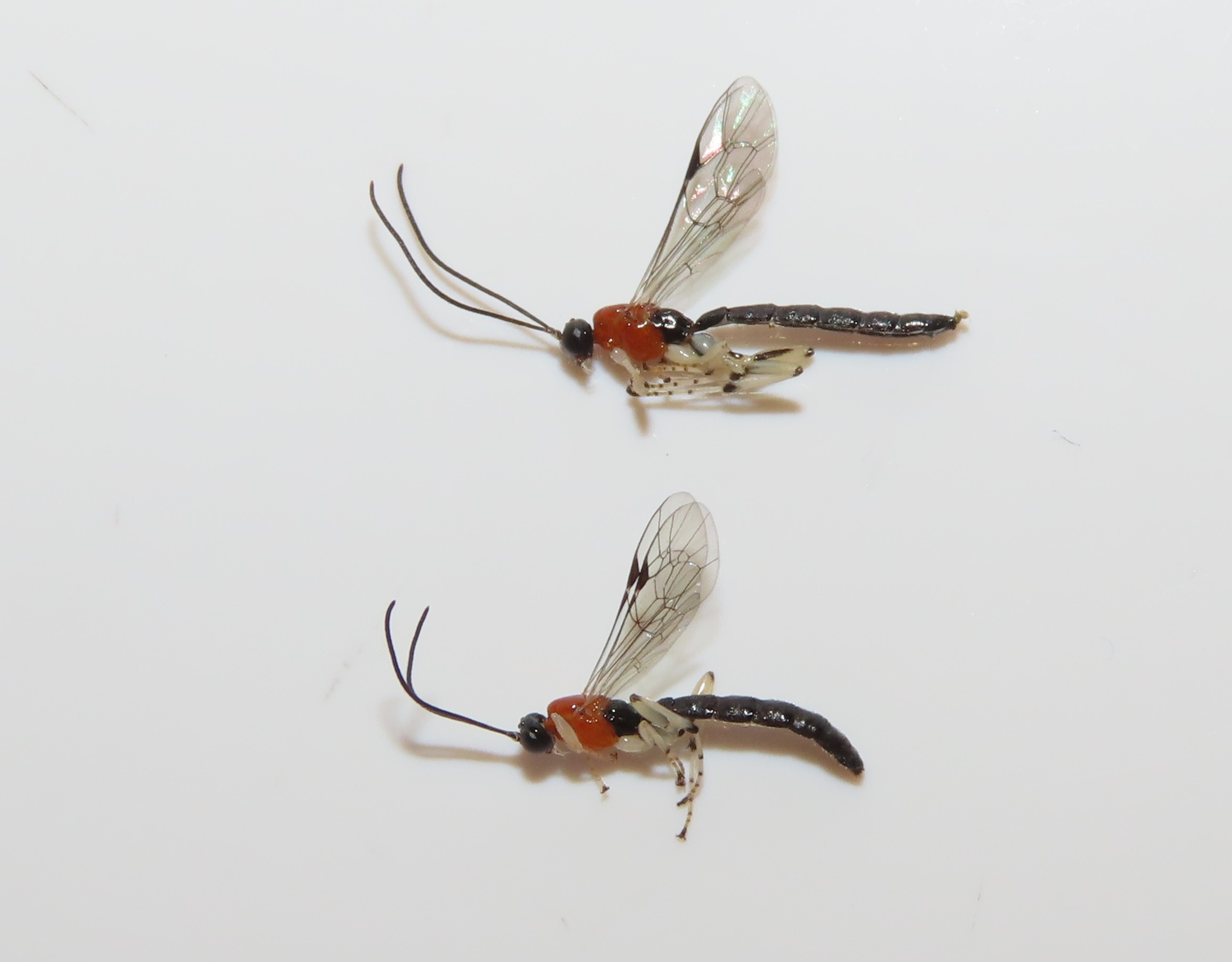
A Potential New Host Record for Calliephialtes grapholithae (Hymenoptera: Ichneumonidae) from a Paper Wasp nest (Hymenoptera: Vespidae: Polistes metricus)

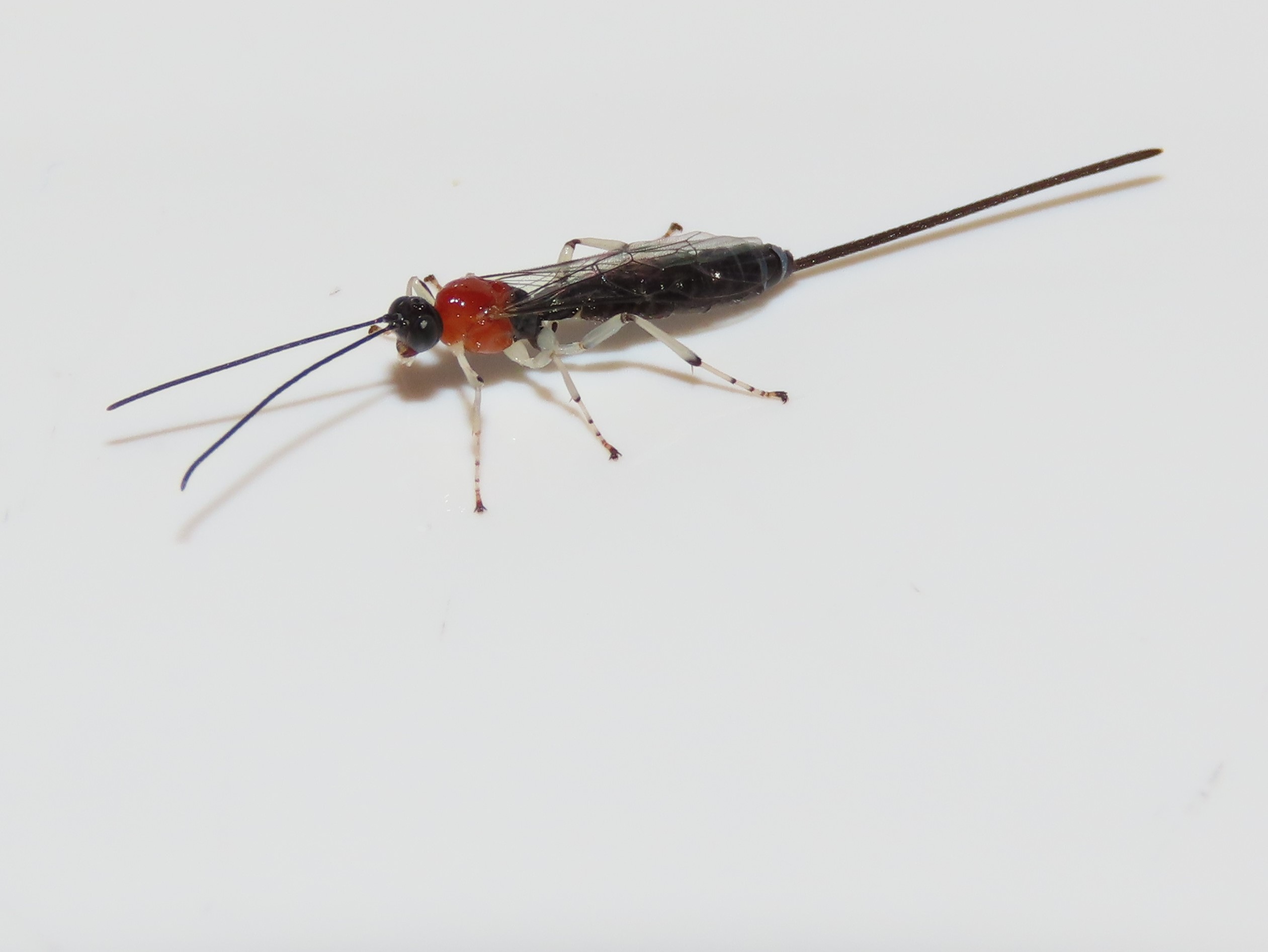
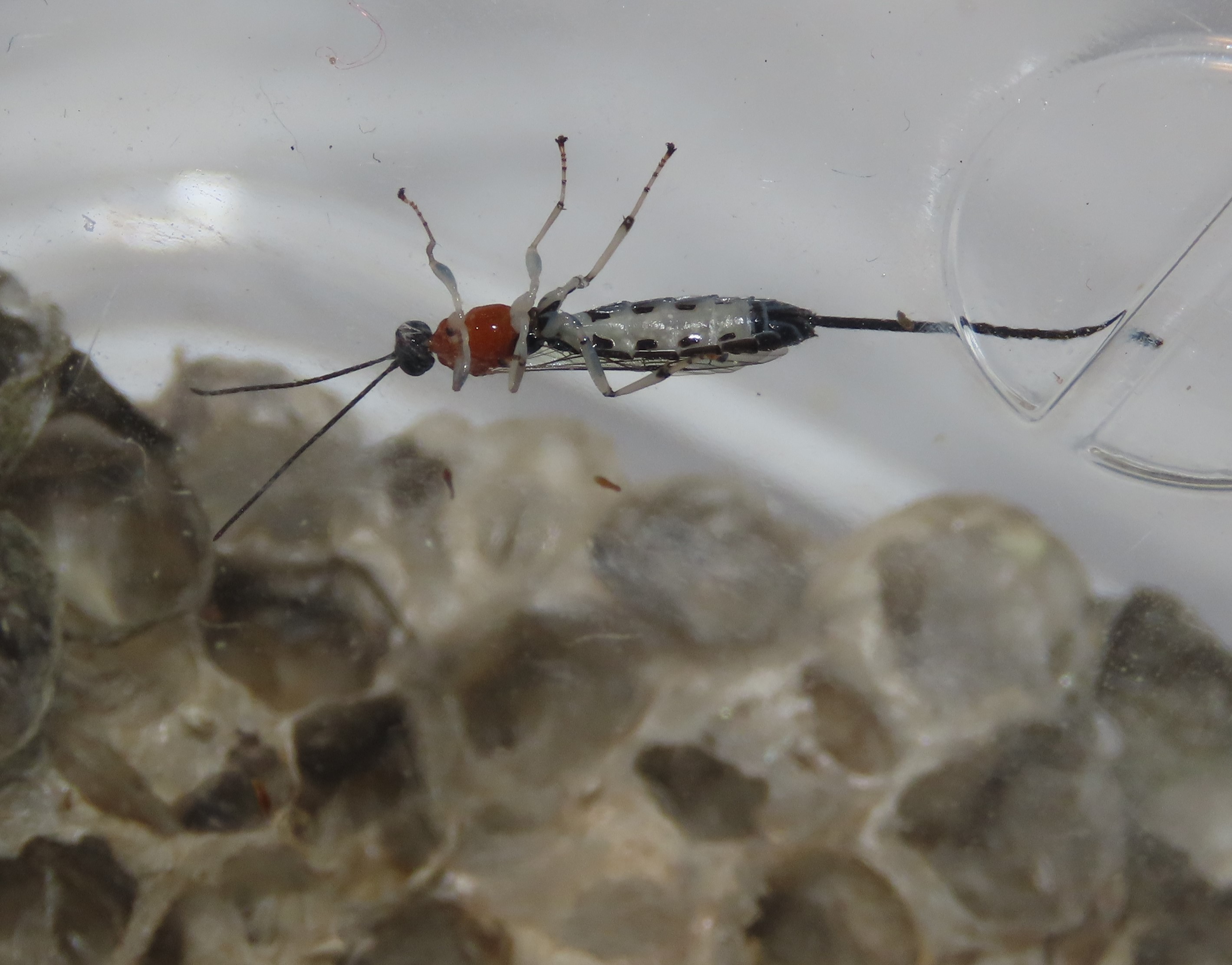
Adult female ichneumon wasp, Calliephialtes grapholithae

It started out innocently enough. Back in 2021, a Facebook post by Sloan Tomlinson (@thatwaspguy on Twitter) caught my attention. He had reared small parasitoid wasps, Elasmus polistis, from an abandoned paper wasp nest that he had contained. I messaged him to learn more, and then followed his suggestion to try this myself.

Nest of Polistes metricus from 2022

We had a nest of the Metric Paper Wasp, Polistes metricus, in a corner of the recessed frame of our back porch doors (French doors) at our home in Leavenworth, Kansas, USA. After the wasps left, I cut down the nest and placed it into a plastic container. Shortly thereafter, in about mid-November, a large number of small parasitoid wasps emerged that were not the same as those that Sloan Tomlinson had reared out. That is a separate mystery from the one I am documenting today.

This year, 2022, we had two Polistes metricus nests, one in each corner of the door frame. One succeeded better than the other by a substantial margin, and I repeated the exercise of cutting down the larger nest and containing it in late autumn. Besides the large number of tiny, metallic parasitoid wasps, I got a shocking surprise.

My partner, Heidi, and I went on a vacation in late October. When we returned, I was amazed to find a live female ichneumon wasp, one nearly deceased male, and one deceased male, inside the container with the Polistes nest. The insect was not one of the species that is a known parasitoid of paper wasps. I was able to identify it as Calliephialtes grapholithae, but that made no contextual sense. All of the known hosts for that species are caterpillars of moths.

Adult males of Calliephialtes grapholithae

Previously recorded hosts for C. grapholithae include larvae of the following Lepidoptera: Acrobasis betulella, (formerly A. hebescella), A. juglandis, A. rubrifasciella (recorded as A. nibrifasciella (Pyralidae: Phycitinae); Carmenta texana (Sesiidae: Sesiinae); Cydia caryana (recorded as Laspeyresia caryana, the Hickory Shuckworm, Tortricidae: Olethreutinae); Meskea dyspteraria (Thyrididae: Siculodinae); Periploca ceanothiella (recorded as Stagmatophora ceanothiella, Cosmopterigidae: Chrysopeleiinae); Thyridopteryx ephemeraeformis (Psychidae: Oiketicinae); Megalopyge opercularis, the Evergreen Bagworm (Megalopygidae). Most of these taxa represent a “concealed host,” such as the Evergreen Bagworm and Hickory Shuckworm.

The only way the association of C. grapholithae with paper wasps can be made is if there is a moth larva involved in some fashion. It so happens that there is. The Sooty-winged Chalcoela, Chalcoela iphitalis, is such a moth (Crambidae: Glaphyriinae). The caterpillar stage is predatory on the larvae of Polistes wasps, inside their nests. Webbing spun by the caterpillars is a clue to their presence. Apparently, the adult female moth approaches the nest at night, when the adult wasps are less alert. Still, she may lay her eggs on the back of the nest, and let her tiny larval offspring find their way into a cell.

Caterpillar of Chalcoela iphitalis from paper wasp nest

Sure enough, I happened to notice one of these moth caterpillars, strikingly similar to a paper wasp larva, in the bottom of the container with the nest and its other associates. There is little doubt in my mind that C. iphitalis is a host for the ichneumon wasp Calliephialtes grapholithae. The pattern of this wasp seeking concealed hosts fits, though how the wasp navigates a well-defended nest of paper wasps is beyond my imagination. I am hoping that such an infiltration can be documented, or that someone else will independently rear the ichneumon from a paper wasp nest. Until that time, I cannot assert, unequivocally, the host relationship.

Adult Chalcoela iphitalis moth

I also wonder if the sever drought experienced by eastern Kansas this past summer had anything to do with the proliferation of the moths that plague the paper wasps. I noticed more than usual. One of the two nests almost failed completely, though one of the foundress wasps may have died prematurely, slowing the nest’s rate of growth, eventually halting it.

Much remains to be discovered about even the most common of insects, especially when it comes to ecological relationships to other species. I urge my readers to undertake what observations and experiments they can to further enlighten our understanding of the natural world.

Sources: Carlson, Robert W. “Database of Hymenoptera in America north of Mexico,” Discover Life
Hoskins, Jonathan. 2021. “Species Calliephialtes grapholithae,” Bugguide.net
McCormac, Jim. 2017. “Wasp-eating moth fills rare niche,” Ohio Birds and Biodiversity
Calliephialtes grapholithae,” iNaturalist.org